
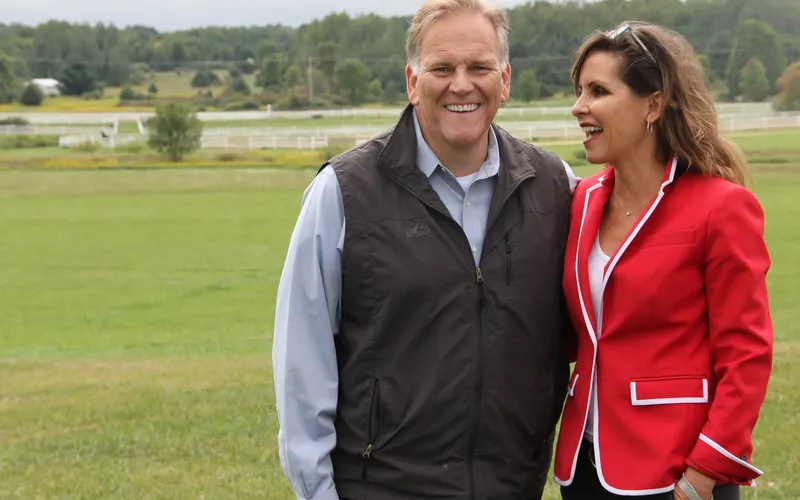
Republican Michigan Senate candidate Mike Rogers says his campaign's internal calculations show him holding an early advantage over Democratic nominee Abdul El-Sayed among voters who have already returned their ballots.
During an appearance on Fox News, Rogers said his campaign estimates he is leading by approximately seven percentage points among early voters it believes are supporting him.
“We’re actually about seven percent ahead on voters that we believe are voting for us returning their ballots,” Rogers said. He prefaced the figure by acknowledging that it came from the campaign’s own models.
Rogers did not release the underlying data or provide independent evidence supporting the estimate. The figure is therefore a campaign projection rather than an official count of ballots broken down by candidate. Michigan does not register voters by political party, meaning campaigns must use modeling to estimate the partisan preferences of people who have already voted.
The claim comes as a contrast to public polling that has generally shown El-Sayed ahead. A CNN/SSRS poll conducted October 20-27 found El-Sayed leading Rogers 49% to 42% among likely voters. Other recent surveys have also shown the Democrat with a similar advantage, creating a stark difference between the public data available and Rogers' account of his campaign's early-ballot projections.
The Michigan contest has drawn national attention as Republicans seek to defend their position in the Senate. The race has also been affected by divisions among Democrats, including a public dispute between El-Sayed and Rep. Haley Stevens, who lost the Democratic primary to him.
Rogers has sought to capitalize on those divisions, particularly disagreements involving Israel and Jewish voters. He told Fox News that Jewish Democrats were organizing to support his campaign, arguing that El-Sayed's rhetoric and positions have alienated some voters who traditionally support Democrats.
With Election Day approaching on November 3, Rogers' claimed early-voting advantage offers a different picture from the recent public polls. Whether the campaign's internal projections accurately reflect the electorate will not be known until ballots are counted.

Comments
No comments yet. Be the first to share your thoughts.