
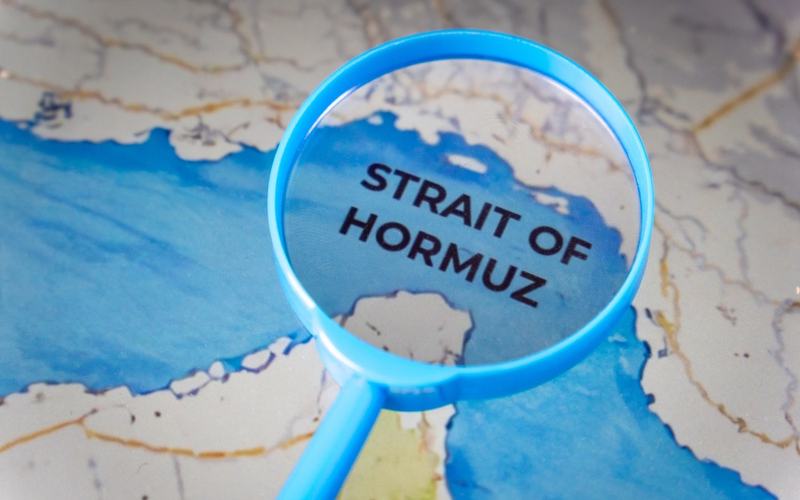
Sailors willing to haul crude through the Strait of Hormuz are being offered as much as $25,000 for a single round trip through the war zone, according to seafarers and job postings reviewed by The Wall Street Journal.
A Chinese crewing agency in Shandong province is offering the bonuses to recruit oilers and ordinary seamen for a supertanker making repeated trips into the Gulf. For some sailors, the payment can equal more than a year's normal earnings.
The financial incentives come as the risks around the strategic waterway continue to mount. Attacks near the strait have struck nine commercial ships over the past two weeks, killing one seafarer and injuring two others, according to the International Maritime Organization and the U.K. Maritime Trade Operations center.
One first mate who has crossed the strait twice in the past month described navigating the area under extraordinary precautions. Both crossings took place at night with the ship's lights turned off, while satellite navigation was unavailable for hours. The crew instead used radar and the coastline to determine the vessel's position.
The sailor said he earned three times his normal monthly pay for the days spent in the danger zone. Another tanker crew member received twice his usual daily rate and said he had been more concerned about possible drone attacks than missiles.
Across the shipping industry, sailors, many from India, the Philippines and China, are being offered hazard pay equivalent to two or three months of their normal wages.
The incentives are part of a broader effort by Gulf oil producers to keep crude moving as many buyers have been reluctant to send their own vessels into the region. Producers have instead turned to supertankers that load at Gulf ports before transporting the oil outside the immediate danger zone for transfers at sea.
Ship brokers estimate producers are paying between $30 million and $40 million for each round trip, equivalent to roughly $15 to $20 per barrel before insurance. Despite the expense, producers view the shipments as preferable to leaving crude unsold.
Saudi Arabia began relying more heavily on such shuttle tanker operations after drone strikes disrupted its East-West pipeline, which normally provides a route for exports that bypasses the Strait of Hormuz. The pipeline has since partially resumed operations, but industry analysts expect Saudi Arabia to continue using shuttle tankers.
The danger has also taken a toll on crews. The first mate said half of his ship's crew quit following one round trip, although managers had little difficulty finding replacements willing to make the journey for the additional compensation.
For shipowners earning tens of millions of dollars from each voyage, the extra crew payments are relatively small.
“Given the millions being made at the moment, that's absolutely nothing to the shipowners,” said Richard Matthews, director of consulting and research at ship broker E.A. Gibson.

Comments
No comments yet. Be the first to share your thoughts.