In less than a month, Iowa voters will go to the polls to cast their ballots for their next U.S. senator. This will mark the first time Iowans will have a new face serving them in the U.S. Senate, regardless of outcome, in over a decade. Republican Sen. Joni Ernst is not seeking re-election to a third term, leaving the race a competitive battle for the state’s first open Senate seat since 2014.
Iowa’s other U.S. Senate seat has long been held by Republican Sen. Chuck Grassley since 1981. Grassley also serves as president pro tempore of the U.S. Senate, making him third in the presidential line of succession after Vice President JD Vance and House Speaker Mike Johnson.
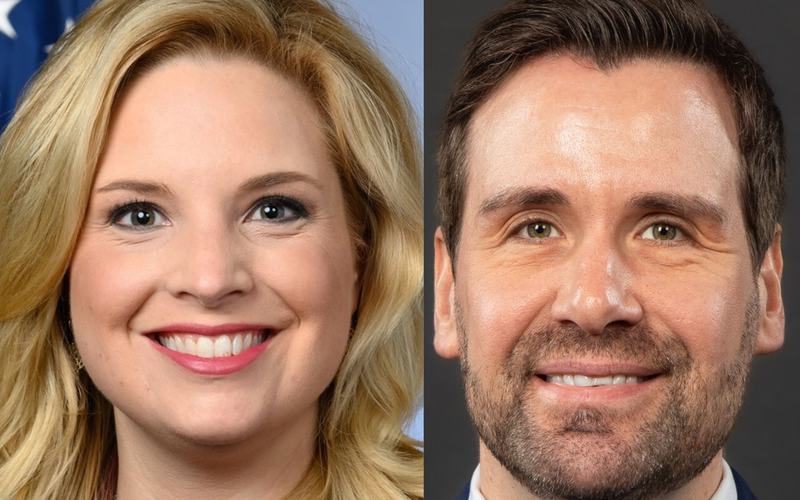
Iowa’s Republican nominee in the race, Rep. Ashley Hinson from Iowa’s 2nd congressional district, has the endorsement of President Donald Trump and faces significant national pressure to keep the key swing state red. The Democrat nominee, state Representative Joshua Turek, has the backing of former president Barack Obama and similarly faces pressure to make gains for his party. Midterm elections are historically difficult on the party in power in Washington, and national Democrat party leaders view the Iowa seat as one of their best pickup opportunities this cycle.
Iowa, despite its relatively modest population and boasting just six electoral college votes, has long had influence on national politics that outsizes itself. The state has been a battleground for decades, and a 2026 victory in Iowa would be more than just another seat in the U.S. Senate. As 2028 approaches, early partisan planning on a road to the White House takes shape with Iowa at the center.
The state has consistently served as a critical foothold for candidates seeking a potential path to the Oval Office. The Iowa Caucuses are the first contest in the United States presidential primary season and are often a strong indicator of a candidate’s chances of success in the later contests. Candidates who perform poorly in Iowa frequently drop out in the following days. Joe Biden, for example, ended his 2008 presidential campaign the same evening of the Iowa caucuses after a crushing fifth-place finish that netted him less than one percent of the state’s delegates. Similarly, Rand Paul suspended his 2016 presidential bid after a fifth place in Iowa where he received less than 8,500 votes in a crowded political field.
When it comes to the general election, Iowa is a similarly sought-after victory. President Donald Trump won Iowa in each of his three presidential general elections in 2016, 2020, and 2024. He also won it in both the 2020 and 2024 Republican presidential caucuses. Trump’s 2016 victory in Iowa was the largest margin of any Republican candidate since Ronald Reagan was on the ballot in 1980. Trump won Iowa in 2024 by more than 13 points, despite pre-election polling that had the state as a tossup.
Similarly, former president Barack Obama has an impressive record of success in Iowa. He won the state in both his 2008 and 2012 presidential elections, taking the state back from Republicans after George W. Bush’s 2004 victory, and won both of Iowa’s Democratic Party presidential primaries.
Turek describes himself as a “Prairie Populist.” He has already broken with the progressive wing of his party on some issues, including his transgender policies. His campaign has stated that he does not support gender-affirming surgeries for minors, citing positions from groups such as the American Medical Association that such procedures should generally be reserved until adulthood. At the same time, he has voted against certain Republican-backed measures in the Iowa legislature, including a 2023 education bill requiring parental notification on name or pronoun changes in schools and a later appropriations bill restricting Medicaid reimbursement for gender-affirming care. He has also opposed efforts to remove gender identity from the state’s civil rights code.
The Trump-endorsed Hinson and the Obama-backed Turek have raised millions for their campaigns, and the race has drawn tens of millions in outside spending from groups supporting the candidates. Federal Election Commission data as of June 30, 2026, shows Hinson leading in candidate fundraising. She had raised roughly $10.2 million, spent $5.4 million, and holds nearly $6.75 million in cash on hand. Turek raised about $6.3 million, spent nearly $3.9 million, and had $2.36 million available on hand. Hinson’s cash advantage was roughly triple Turek’s at the point of filing. Financial filings are required quarterly from the campaigns; more reports are expected to be released in October.
Hinson’s totals include support through her main campaign committee and joint fundraising vehicles. Turek, a Paralympic medalist and state lawmaker, has emphasized grassroots and individual contributions; his campaign has highlighted avoiding certain corporate PAC money but notably still receives large amounts of support from Democratic leadership PACs and other similar sources.
Outside spending has significantly amplified the totals. The Senate Leadership Fund, a major Republican super PAC, announced a $29 million investment to support Hinson beginning in the summer and running through Election Day, covering television, digital, radio, mail, and get-out-the-vote efforts. Affiliated groups such as One Nation have also reserved ad time in the state.
On the Democratic side, the Senate Majority PAC reserved $13.4 million in television advertising targeting Hinson and later announced an additional $17 million fall ad buy focused on her congressional record, costs facing families, and related issues, bringing its planned investment above $30 million. VoteVets, a Democratic-aligned veterans' group, spent more than $10 million supporting Turek, particularly during the Democratic primary against state Sen. Zach Wahls.
Other groups have weighed in as well. Americans for Prosperity Action and similar organizations spent millions in the Republican primary supporting Hinson or opposing rivals. More recently, entities including Elon Musk’s America PAC and Koch network affiliates have directed hundreds of thousands to low-seven figures into the race on the Republican side. Primary outside spending alone for Turek exceeded what the Democratic candidates themselves had spent at certain points.
Overall candidate fundraising in the race has placed Iowa among the more expensive Senate contests of the cycle according to trackers, with general-election candidates accounting for tens of millions raised and spent when combined with outside activity. Spending continues to ramp up in the final months before the November 3 election, with both campaigns and allied groups expected to air significant volumes of television, digital, and other advertising focused on costs of living, agriculture, taxes, and records in office.
Polls in the race have shown a tight contest. An Emerson College poll from early September had Hinson ahead by five points. A YouGov survey also released September 11 found Turek at 44 percent and Hinson at 43 percent. Subsequent polling through late September has kept the race competitive, with averages showing it within a few points either way.
Whether the eventual winner is Hinson or Turek, the outcome will send signals far beyond control of the Senate. A Republican hold would reinforce Iowa’s recent rightward shift and strengthen the party’s position heading into the 2028 presidential cycle, when the Iowa caucuses will once again serve as an early proving ground. A Democratic pickup in a state Trump carried by double digits would offer a rare midterm breakthrough in the Midwest, potentially reshaping both parties’ strategies for the path to the White House in two years. In a state that has long punched above its weight in presidential politics, this open-seat contest is more than a midterm skirmish.

Comments
No comments yet. Be the first to share your thoughts.