
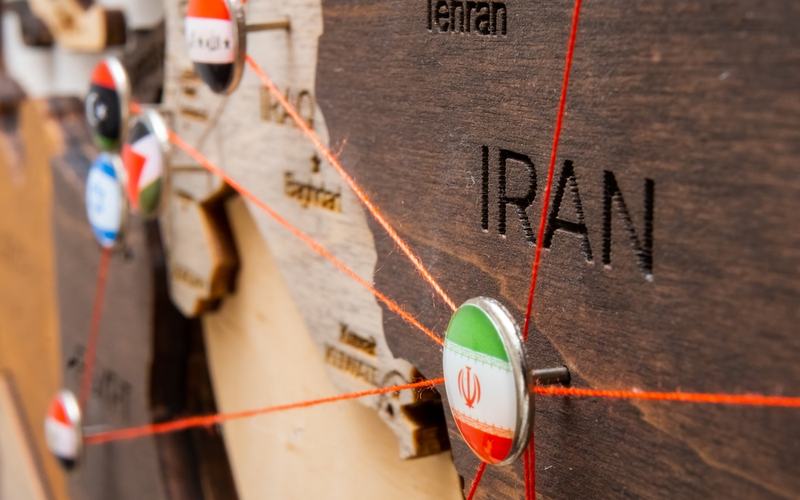
Saudi Arabia, Turkey and Pakistan sent senior officials to Tehran on Monday for high-level talks with Iranian leaders, seeking to prevent renewed fighting with the United States and Israel as Washington weighs its next military options.
The delegation included Saudi Defense Minister Prince Khalid bin Salman, Pakistani army chief Field Marshal Asim Munir and Turkish intelligence chief Ibrahim Kalin. They met Iranian President Masoud Pezeshkian and Mohsen Rezaei, secretary of Iran’s Supreme National Security Council, at Tehran’s Saadabad Palace.
The diplomatic effort reflects growing concern among regional governments that another round of military action could trigger Iranian retaliation against neighboring countries and threaten critical energy infrastructure. Saudi Arabia said the mission was intended to reduce tensions and support mediation efforts led by Qatar and Pakistan.
The four countries agreed to continue discussions on regional peace and security, according to a joint statement, but announced no major breakthrough. The talks marked a significant diplomatic engagement as the countries seek to prevent the conflict from widening.
The meeting also came amid heightened tensions between Saudi Arabia and Iran over attacks attributed to the Iranian-backed Houthi movement in Yemen. The Houthis have launched missiles and drones against Saudi targets, including infrastructure associated with energy production and transportation.
The talks followed a visit to Tehran on Sunday by Qatari mediators working with Washington. According to The New York Times, mediators proposed a five-day framework under which Iran would reopen the Strait of Hormuz to commercial shipping while the United States lifted its naval blockade of Iranian ports. The proposal also sought an initial concession from Tehran on its nuclear program.
Negotiations remain complicated by disagreements over which side should make the first move. Iran has insisted that Washington lift its blockade and restrictions on Iranian oil exports before Tehran agrees to discuss nuclear concessions.
The Strait of Hormuz remains a central point of contention. Iran’s armed forces chief claimed Monday that Tehran maintained complete control over the waterway and that ships could transit only under Iranian regulations. U.S. Central Command, meanwhile, said Sunday that American forces had assisted more than 3,000 merchant vessels navigating the strait over the previous six months.
Iran has also resisted U.S. demands concerning its nuclear program. Rezaei recently declared that “not a single particle of enriched nuclear material” would leave the country. Pezeshkian reiterated Monday that Iran intended to pursue nuclear activities under what Tehran describes as its rights under the Nuclear Non-Proliferation Treaty.
Iran has enriched uranium to 60% purity, well above levels typically used in civilian nuclear power generation. The International Atomic Energy Agency has raised concerns about Iran’s compliance with nuclear safeguards obligations, making the program a central obstacle to a broader agreement.
Meanwhile, Washington is weighing whether to resume major military operations. CNN reported Monday that U.S. forces could be prepared to launch a large-scale campaign within 96 hours of an order from President Donald Trump, potentially targeting military installations, energy infrastructure and nuclear facilities. Trump has not authorized such an operation, and reports indicate he has ruled out strikes before the U.S. midterm elections.
Trump described the decision as a choice between reaching an agreement with Tehran and resuming military action. Speaking to Fox News on Sunday, he said, “Do I make a deal with them or do I finish them off? That’s the only question.”
The president also renewed his support for Israeli Prime Minister Benjamin Netanyahu ahead of Israel’s Tuesday election, urging voters to return Netanyahu to office so the two countries could “finish the job that we started” against Iran.
For Saudi Arabia, the threat extends beyond the possibility of renewed U.S.-Iran fighting. The Saudi-led coalition announced fresh strikes against Houthi military infrastructure in Yemen on Monday, saying it destroyed five ballistic missile storage tunnels, four launchers and another missile storage facility.
Saudi authorities also reported intercepting a ballistic missile aimed at Riyadh and three drones. The Houthis claimed they had carried out new attacks targeting the kingdom’s East-West oil pipeline and Riyadh’s international airport, although Saudi officials had not confirmed those specific claims.
Egypt has also moved to support Saudi Arabia’s defense. Its parliament authorized the deployment of military forces to help protect the kingdom against Houthi attacks, though no deployment has been announced.
Diplomatic efforts are expected to continue Tuesday in Moscow, where Russian President Vladimir Putin is scheduled to meet separately with Pezeshkian and Qatari Emir Sheikh Tamim bin Hamad Al Thani during an international energy summit.
The latest talks produced a commitment to further dialogue but left the central disputes unresolved. With Iran resisting nuclear concessions, the United States maintaining pressure, and Gulf countries confronting potential retaliation, regional governments face the risk that diplomacy could fail to prevent another major escalation.

Comments
No comments yet. Be the first to share your thoughts.