
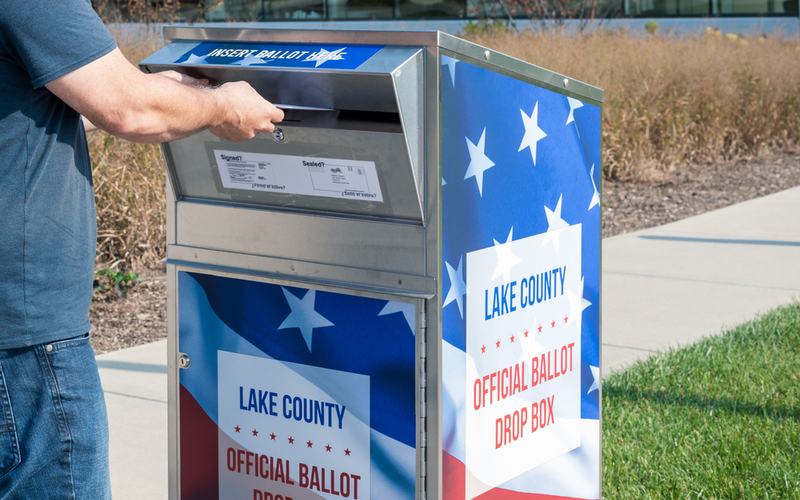
The U.S. Supreme Court appeared skeptical of state laws permitting the counting of mail-in ballots that arrive after Election Day during oral arguments in a Mississippi case last month.
The case, Watson v. Republican National Committee, challenges a 2020 Mississippi law enacted on a bipartisan basis amid the COVID-19 pandemic. The law allows absentee ballots postmarked by Election Day, the Tuesday after the first Monday in November, to be counted if received by election officials within five business days afterward. Challengers, including the Republican National Committee, the Mississippi Republican Party, a voter, a county election official, and the Libertarian Party of Mississippi, argue the practice violates longstanding federal statutes from 1845 and 1872 that designate Election Day for federal elections.
A three-judge panel of the 5th U.S. Circuit Court of Appeals ruled in favor of the challengers in October 2024, holding that ballots must be received by Election Day. The full appeals court denied Mississippi's rehearing request, and the Supreme Court agreed to hear the case in November 2025. Arguments took place on March 23, 2026.
Paul Clement, representing the challengers, emphasized historical tradition, noting that in the 19th century, casting and receiving ballots were "inextricably intertwined." He warned that late ballots could flip results after Election Day, eroding confidence: "The losers are not going to accept that result. Full stop." D. John Sauer, U.S. Solicitor General supporting the challengers, called Mississippi's position too permissive for Congress's 19th-century intent.
Mississippi Solicitor General Scott Stewart defended states' broad authority over elections, arguing voters finalize their choices upon mailing by Election Day, and federal law does not prohibit later receipt.
Conservative justices voiced significant doubts. Justice Neil Gorsuch raised a hypothetical about voters recalling ballots after a scandal but before results, questioning safeguards: "FedEx isn't an election official." Justice Samuel Alito highlighted "line-drawing problems" on grace period lengths. Justice Brett Kavanaugh cited risks to public confidence from delayed tallies. Justices Amy Coney Barrett and Clarence Thomas also probed concerns.
Liberal justices pushed back. Justice Ketanji Brown Jackson stressed congressional intent and noted federal laws incorporating state deadlines for military voters. Justice Elena Kagan questioned distinctions between early and late voting, referencing the 2022 Electoral Count Reform Act. Justice Sonia Sotomayor criticized historical arguments as out of context.
The ruling could affect 14 states and the District of Columbia with similar grace periods: Alaska, California, Illinois, Maryland, Massachusetts, Mississippi, Nevada, New Jersey, New York, Oregon, Texas, Virginia, Washington, and West Virginia. In 2024, about 725,000 such ballots were counted nationwide, with mail ballots comprising 30% of votes. Four Republican-led states recently ended their grace periods.
A decision is expected by late June or early July, potentially requiring changes before the November midterm elections.

Comments
No comments yet. Be the first to share your thoughts.