
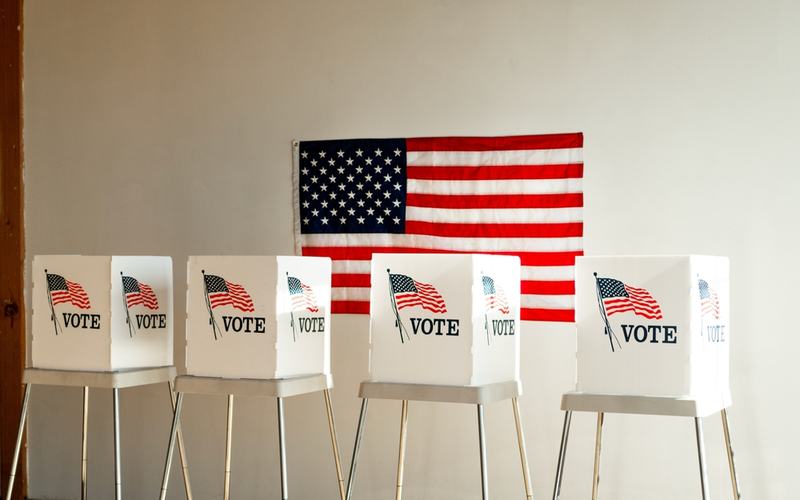
Nearly 4.5 million Texans cast early ballots during the first seven days of voting, signaling heightened participation ahead of the November 3 election as Republicans and Democrats compete for control of the U.S. Senate.
The early-voting total represents 23.4% of registered voters and is approximately 50% higher than turnout at the same point in the 2022 midterm elections, according to figures from the Texas Secretary of State cited by The Texas Tribune.
The surge comes as Republican Texas Attorney General Ken Paxton faces Democrat state Rep. James Talarico in a closely watched Senate contest that could influence the balance of power in Washington. Democrats are seeking their first statewide election victory in Texas since 1994, while Republicans are counting on strong participation to protect their longstanding advantage in the state.
Early-voting patterns show particularly strong participation among Texans with Democratic primary histories. Republican political consultant Derek Ryan’s analysis found that these voters accounted for 35% of early ballots, compared with 33% among voters with Republican primary histories. Ryan said the numbers represent an unusual development because Republicans have traditionally led early voting in recent elections.
Geographic trends also indicate increased participation in heavily Democratic areas. Counties that supported former Vice President Kamala Harris by at least 20 percentage points in the 2024 presidential election had already reached 97% of their early-voting totals from the same point in that election. Counties that backed President Donald Trump by similarly wide margins had reached 72%, according to figures cited by CNN.
Republican strategist Vinny Minchillo cautioned against treating the early numbers as evidence that Democrats will win the Senate race. He said Republican participation had increased after the opening days of early voting and described himself as cautiously optimistic about the GOP’s prospects.
Latino voters are also accounting for a growing share of early ballots, though the political implications remain uncertain. Republicans are seeking to build on Trump’s gains among Hispanic voters in 2024, while Democrats hope increased participation in urban and diverse communities will strengthen their statewide position.
Recent polling underscores the competitiveness of the Paxton-Talarico contest. A Fox News poll showed the candidates tied at 49% each, while an Emerson College/Nexstar survey gave Talarico a narrow 49%-48% advantage. Paxton acknowledged the close race last week, writing on X that the contest was tied and that every bit of support mattered.
Ryan estimates that as many as 10 million Texans could vote in the election, potentially bringing turnout close to the 53% recorded during the competitive 2018 midterms. His analysis also identified more than 2.1 million Texans who participated in at least one of the last four Republican primaries but had not yet cast a ballot in the general election.
Early voting continues through Friday, leaving both parties with additional opportunities to mobilize supporters before Election Day. However, turnout figures alone cannot determine the eventual outcome, particularly because Texas does not register voters by political party. Primary voting history offers an indication of partisan tendencies, but it does not establish how every voter will cast a general-election ballot.
The race remains a critical test for both parties. Democrats see an opportunity to break their statewide losing streak, while Republicans are counting on their remaining voters to turn out and preserve the GOP’s hold on one of the nation’s most important Senate seats.

Comments
No comments yet. Be the first to share your thoughts.