
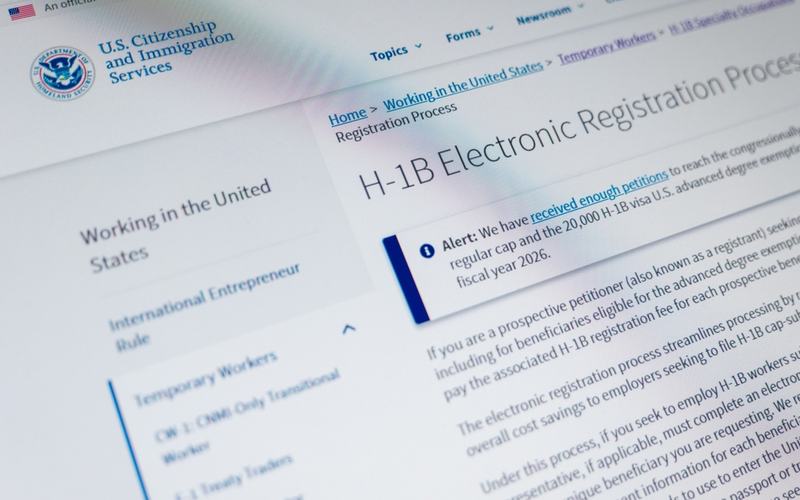
The Trump administration on Monday released a proposed regulation to codify a fee of more than $100,000 on new H-1B visas for highly skilled foreign workers.
The move formalizes an unprecedented charge that President Trump first imposed last year through administrative action. Federal courts later blocked that earlier effort, prompting the administration to pursue a formal rulemaking process to strengthen its legal footing.
H-1B visas allow U.S. employers to hire foreign professionals in specialty occupations such as technology, engineering, and finance. Critics have long argued that the program is frequently abused by outsourcing firms that underpay workers and displace American talent. The proposed fee aims to raise the cost of participation sharply and deter such practices.
Administration officials described the regulation as necessary to protect U.S. workers and ensure that companies turn first to domestic employees before seeking foreign labor. The fee would apply only to new petitions, leaving existing visa holders unaffected.
The proposal will now undergo a public comment period before any final rule can take effect. Supporters expect the higher barrier to encourage wage growth and hiring of American graduates in STEM fields.
Business groups have opposed similar past measures, warning that elevated costs could reduce access to specialized talent and slow innovation at U.S. companies. The administration has countered that the current system already favors large outsourcing contractors over smaller domestic firms.
Monday's announcement marks the latest step in the president's ongoing efforts to tighten immigration rules for temporary work visas. Officials said the regulation reflects a commitment to reforming programs that have operated with minimal oversight for years.

Comments
No comments yet. Be the first to share your thoughts.