
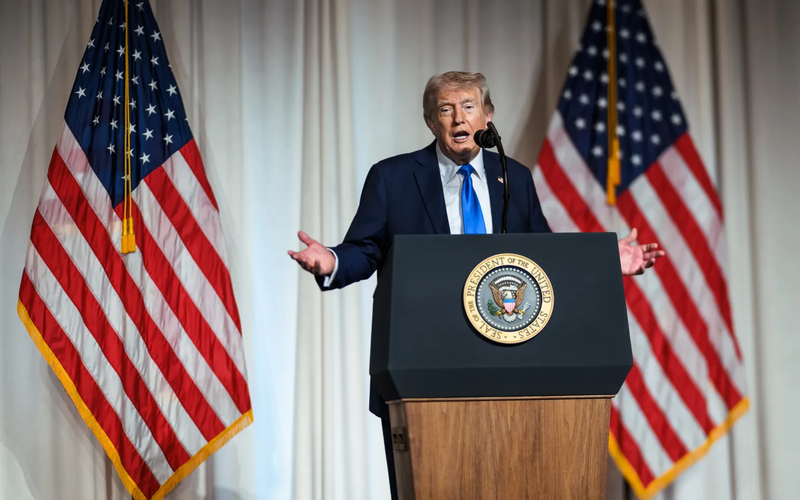
President Donald Trump's administration plans to continue its tariff policies through the remainder of his term despite Republican losses in last week's midterm elections, arguing that import duties are necessary to rebuild American manufacturing, strengthen supply chains and protect national security.
Jim Goyer, director of the White House Office of Public Liaison, committed Tuesday while speaking to business leaders at the B20 USA Summit in Washington. He said the administration intends to maintain its current approach for the rest of Trump's presidency.
“And we are just getting started,” Goyer said.
Gary Cohn, who served as Trump's chief economic adviser during his first administration and is now vice chairman of IBM, offered a different assessment, warning that tariffs ultimately raise costs for American consumers. He described the duties as a “consumption tax” and cited aluminum tariffs as an example of how import costs can increase vehicle prices.
“You and I, if we're buying a new car, we are eating that cost,” Cohn said. He also suggested economic frustration contributed to Republican election losses, saying voters prioritized their financial well-being.
A Reuters/Ipsos poll released Tuesday found that 62% of Americans support repealing Trump's tariffs. The survey also found that just 21% approved of his handling of the cost of living. Separately, October consumer prices rose 0.4%, exceeding economists' expectations, according to the Bureau of Labor Statistics.
Not all business leaders agreed with Cohn's criticism. Jim Fitterling, executive chairman of chemical manufacturer Dow, acknowledged that tariffs can increase prices but defended them as a tool for countering unfair foreign competition and protecting American industry.
Cohn suggested Trump and congressional Democrats could find common ground by maintaining permanent protections against unfair Chinese trade practices while easing tariffs on Canada. Democrats have pledged to challenge the administration's trade policies after taking control of Congress in January, although Trump's executive authority and ability to veto legislation could make efforts to reverse the tariffs difficult.

Comments
No comments yet. Be the first to share your thoughts.