
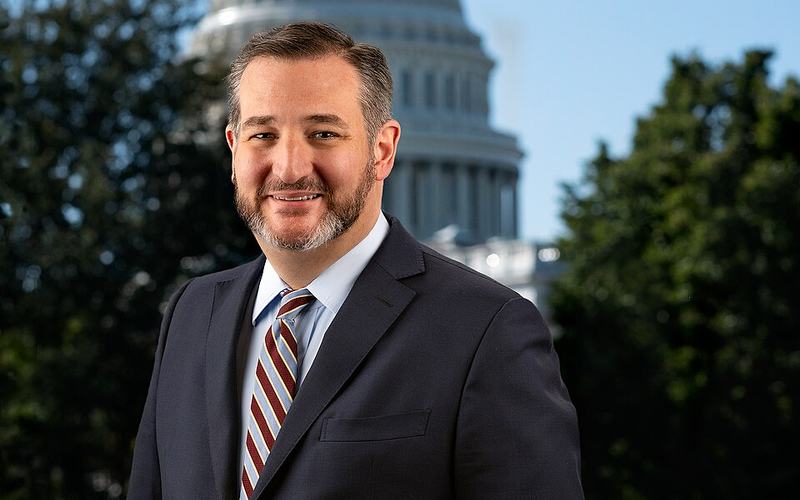
President Donald Trump joked that Sen. Ted Cruz, a Texas Republican, could win unanimous Senate confirmation to the Supreme Court because lawmakers from both parties would supposedly be happy to see him leave Congress.
“I would pick Ted Cruz to be the next Supreme Court Justice,” Trump quipped. “The Democrats will 100% vote for it because they hate the guy and they want to get rid of him. And the Republicans would 100% vote for it because they can't stand him.”
“So I'd get 100% of the vote,” Trump added.
President Trump: "I would pick Ted Cruz to be the next Supreme Court Justice." pic.twitter.com/DypAPO675k
— CSPAN (@cspan) October 28, 2026
Trump's remark hinged on the idea that Cruz has managed to irritate members of both parties during his time in Washington, albeit for different reasons. Democrats have frequently clashed with the Texas Republican over his conservative positions on immigration, border security, government spending and the federal judiciary. Cruz has also developed a reputation for challenging members of his own party when he believes they are not sufficiently committed to conservative priorities.
The senator first rose to national prominence during the Tea Party movement and was elected to the Senate in 2012. A former Texas solicitor general, Cruz built his political profile around constitutional conservatism, opposition to the Affordable Care Act and a confrontational approach to the political establishment. He sought the Republican presidential nomination in 2016, competing against Trump before eventually endorsing him in the general election.
Although Cruz and Trump have sometimes clashed, the two Republicans have also worked together on conservative policy priorities. Cruz has continued to serve as a prominent voice in the Senate on issues including energy policy, border enforcement, judicial appointments and limits on federal government authority.
Trump's hypothetical nomination would also carry constitutional significance. Supreme Court justices are nominated by the president and must receive Senate confirmation before taking office. The process can become a major political battle, with senators scrutinizing a nominee's judicial philosophy, constitutional interpretation and legal background.
In practice, Supreme Court confirmations are rarely unanimous, particularly in an era of sharp partisan divisions over abortion, executive authority, religious liberty and the scope of federal power. Trump's joke turned that familiar political reality on its head by suggesting that Cruz could receive overwhelming support not because lawmakers agreed with his views, but because they would prefer to have him on the court rather than in the Senate.
Trump's comments were not a formal announcement of a Supreme Court nomination. Instead, the president used the prospect of elevating Cruz to the nation's highest court as a punchline about the Texas senator's relationships with his fellow lawmakers.

Comments
No comments yet. Be the first to share your thoughts.