
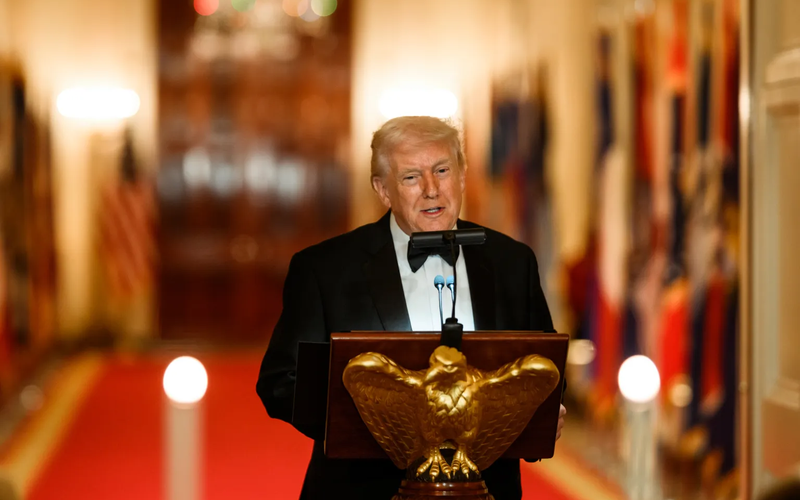
President Donald Trump indicated Tuesday that the United States is prepared for a second round of direct talks with Iran as early as Wednesday or Thursday, potentially in Islamabad, Pakistan. The comments came amid a fragile two-week ceasefire set to expire on April 21 and a U.S. naval blockade of the Strait of Hormuz imposed after initial negotiations failed over the weekend.
Trump made the remarks in an interview with the New York Post, stating that a second round "could be happening over the next two days." He suggested reporters stay in Pakistan because "something could be happening over the next two days, and we’re more inclined to go there." The president also expressed optimism, telling Fox Business that the war is "very close to being over."
The first round of in-person talks, the highest-level direct engagement since Iran's 1979 Islamic Revolution, took place April 11-12 in Islamabad. Led by Vice President J.D. Vance, the 21-hour marathon session ended without agreement. Vance noted that Iranian negotiators "moved in our direction, but they didn’t move far enough." Key sticking points included Iran's nuclear program and control of the Strait of Hormuz, through which a fifth of global oil flows in peacetime.
In response, the U.S. launched a naval blockade on Iranian ports via the Strait of Hormuz starting April 13, halting maritime trade and sending oil prices surging. Trump described Iran's prior control of the waterway as "blackmail and extortion." No ships passed the blockade in its first full day, though a U.S.-sanctioned Chinese tanker reportedly transited earlier. The move has exacerbated global economic pressures, with warnings of supply bottlenecks for oil, fertilizer, and goods.
U.S. demands center on permanently barring Iran from nuclear weapons, including a 20-year halt to uranium enrichment, dismantling key facilities, and handing over enriched uranium stockpiles. The White House insists on a fully reopened Strait without Iranian tolls or control. Iran has countered with a five-year enrichment suspension and seeks to maintain some oversight of the waterway for reparations. Iranian Foreign Minister Abbas Araghchi claimed the sides were "inches away" from a deal but accused the U.S. of "maximalism, shifting goalposts, and blockade."
Pakistan has emerged as a key mediator, with its army chief visiting Tehran Wednesday to discuss resuming talks. U.N. Secretary-General António Guterres called a restart "highly probable." The ceasefire, announced April 7 following U.S. and Israeli strikes that began February 28, holds tenuously. Israel continues operations in Lebanon, which Iran insists must be included in any truce, complicating matters.
Trump reiterated that Iran "called this morning" and wants a deal "very badly," but emphasized no nuclear weapons. Negotiators could return to Islamabad later this week, though nothing is scheduled. The White House confirmed discussions are underway but awaits Iran's readiness to meet demands.

Comments
No comments yet. Be the first to share your thoughts.