
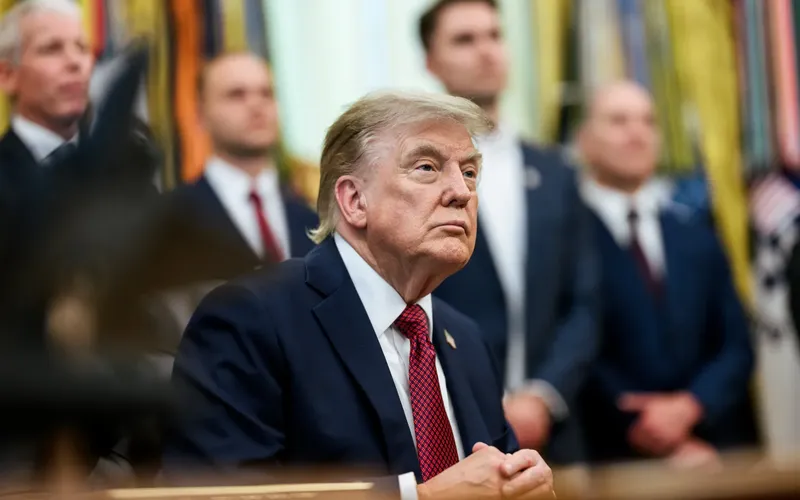
President Trump issued an executive order on Friday waiving the application of numerous sanctions, restrictions and duties on Russia and certain other countries under the Lindsey O. Graham Sanctioning Russia and Iran Act of 2026. The order, released by the White House, certifies that the waivers are in the national interests of the United States. Trump submitted the required certification and report to Congress as mandated by the law.
Trump signed the Graham Act into law on September 18. The legislation authorizes expanded sanctions on Russian entities, officials and sanctions-evasion networks, along with tariffs of up to 500 percent on Russian energy imports and up to 100 percent on goods from the top five importers of Russian crude oil or natural gas. The measures had been scheduled to begin taking effect as early as October 18.
The executive order states that the rate of duty on goods from Russia shall increase by 500 percent, subject to the exceptions and waivers outlined in the order. It also references section 115 of the Graham Act, which permits presidential waivers with congressional notification. The Graham Act was championed by the late Senator Lindsey Graham before his death in July. It passed the Senate 86-11 and the House 262-159.
The action addresses rising energy costs, including diesel fuel, ahead of the midterm elections. Officials noted that full implementation of the sanctions risked higher prices for American consumers and businesses at a time when domestic energy production remains a priority.
The move comes after Trump announced a deal last week allowing Russia to resume diesel exports, stating that Moscow would immediately supply more than 300,000 metric tons, or 2.25 million barrels, to US and global markets.
Some Democratic lawmakers criticized the waivers as undercutting pressure on Russia. Certain European officials also expressed concern over potential effects on coordinated sanctions policy. Meanwhile, Industry groups and Republican supporters welcomed the move as protecting energy affordability and maintaining flexibility in U.S. policy.

Comments
No comments yet. Be the first to share your thoughts.