
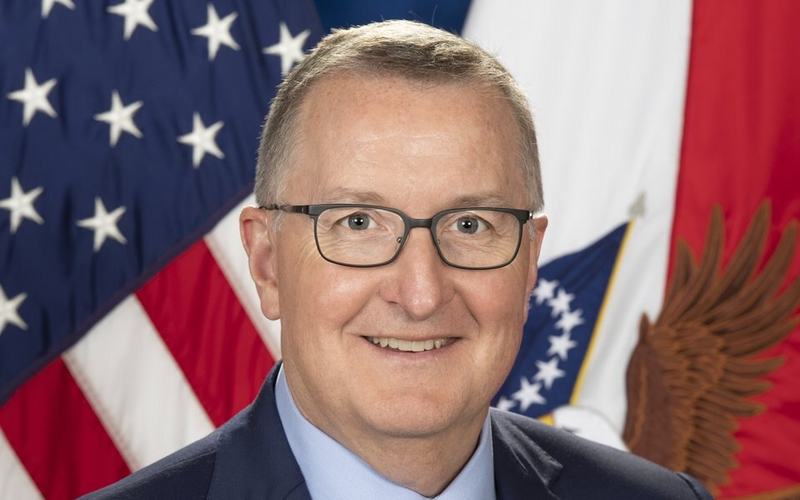
Secret Service Deputy Director Matthew Quinn announced Friday that he will leave the agency on November 7, as the agency faces increased threats against President Donald Trump and renewed scrutiny of its ability to protect high-profile officials.
Quinn’s departure comes as Secret Service Director Sean Curran has warned of an increasingly challenging threat environment. In an interview with CBS News’ 60 Minutes that aired Sunday, Curran said threats against the agency’s full-time protectees had increased by more than 40% compared with the previous year. He also said the agency had opened approximately 10,000 threat cases since January.
Quinn has acknowledged that defending against coordinated drone attacks remains a major challenge for the agency. “Swarms are a huge problem and a big threat,” he told CBS News.
The Secret Service has faced intense scrutiny since the July 2024 assassination attempt against Trump at a campaign rally in Butler, Pennsylvania. The gunman wounded Trump, killed rally attendee Corey Comperatore and injured two other people.
A Department of Homeland Security inspector general report issued July 1, 2026, found that the agency missed multiple opportunities to detect, prevent and disrupt the attack. The report identified failures involving communications, intelligence sharing and security planning.
Trump also survived an assassination attempt at his Florida golf course in September 2024. In April 2026, a gunman breached the security perimeter at the White House Correspondents’ Association dinner, prompting the evacuation of Trump and other senior officials, CBS reported.
Since those incidents, the agency has continued developing counter-drone capabilities designed to detect, track, and intercept unauthorized aircraft. Officials have also studied lessons from the war in Ukraine, where the widespread use of drones has transformed modern combat and demonstrated the challenges posed by coordinated aerial attacks.
Quinn brings extensive experience in both protective operations and counter-drone technology. He served 23 years with the Secret Service before retiring in 2021 and joining Fortem Technologies, a company specializing in counter-drone systems, as a senior vice president.
He returned to the Secret Service in 2025 at Curran’s request, according to RealClearPolitics. His previous employment with Fortem has prompted questions about potential conflicts of interest involving the company’s technology, although reporting has not established that those concerns played a role in his departure.
Quinn is scheduled to leave the agency on November 7 as the Secret Service continues working to strengthen its protective operations and address emerging threats. His departure comes at a critical time for an agency facing pressure to demonstrate that it can prevent future security failures while adapting to increasingly sophisticated threats against the president and other protectees.

Comments
No comments yet. Be the first to share your thoughts.