
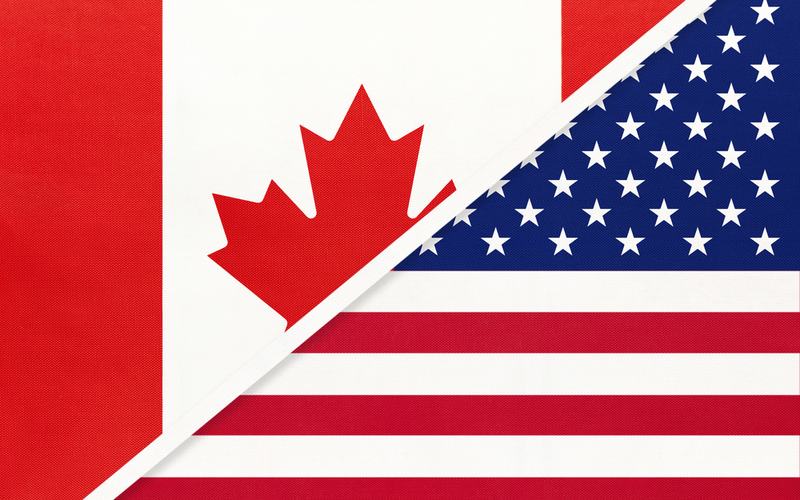
Parks Canada discontinued the Canada Strong Pass on Monday, ending free admission to national parks, historic sites, and marine conservation areas for all visitors, including those from the United States.
Regular fees resumed the following day.
The temporary program, which ran from June 19 to September 7 this year, provided no-cost entry and a 25% discount on camping fees at participating sites. It applied to both Canadian residents and international travelers without requiring any physical or digital pass.
This marks the third period the initiative operated, following earlier rounds in 2025 and early 2026. Officials noted the program boosted visitation, with Parks Canada reporting a 13% increase in visitors during the prior summer compared to 2023.
The conclusion comes against a backdrop of strained U.S.-Canada relations. The United States implemented new surcharges for foreign visitors at select national parks starting in 2026, including a $100 per-person fee at 11 popular sites on top of standard entry costs. Non-resident annual passes also rose significantly.
Canada responded with measures to promote domestic tourism, including the Strong Pass, as part of efforts tied to broader trade disputes. Negotiations between the countries collapsed in recent months, leading to reciprocal tariffs of up to 50% on certain goods. Canadian travel to the U.S. declined notably last year.
Reactions to the program's end have been mixed among travelers and tourism operators. Some U.S. visitors expressed disappointment over losing the cost-saving benefit for cross-border trips to sites like Banff and Jasper. Others noted the program's success in drawing crowds to Canadian destinations.
This update has highlighted the growing tensions between the United States and Canada, with the U.S. imposing import tariffs on its northern neighbor.
The Trump administration imposed a 50% tariff on $27.6 billion of Canadian goods.
In retaliation, Canada implemented counter-tariffs that took effect on Tuesday, covering $27.6 billion in U.S. imports. The duties range from 15% to 50%, with rates generally matching the corresponding U.S. tariffs.
The trade war has strained relations between the two countries; on Wednesday, the Trump Administration announced a ban on imports of some dairy products and motorcycles from Canada, along with most alcoholic beverages.
Taking effect on September 29, Trump’s ban will also move to shut Canadian products out of large, long-term U.S. government contracts and directed the U.S. General Services Administration to declare Canadian products ineligible for those contracts until Canada allows “full and fair reciprocity″ for American products.
According to an article by Worldstopexports, the data show that the US exported $329.8 billion worth of products to buyers in Canada in 2025. US export sales to Canada fell 5.4% to $348.5 billion in 2024.
This resulted in a $63.2 billion trade deficit with Canada in 2025.
Provided below are the top ten imports and exports between the U.S. and Canada in 2025.
Top US Imports from Canada:
- Crude oil—$90,155,791,000
- Cars—$25,271,388,000
- Petroleum gases—$12,237,485,000
- Processed petroleum oils —$11,295,305,000
- Automobile parts/accessories—$11,012,802,000
- Turbo-jets—$6,963,675,000
- Aircraft, spacecraft—$6,344,983,000
- Gold (unwrought)—$6,269,888,000
- Aluminum (unwrought)—$6,085,711,000
- Trucks—$5,650,396,000
Top US Exports to Canada:
- Automobile parts/accessories—$13,845,316,000
- Cars—$12,739,897,000
- Processed petroleum oils—$12,322,937,000
- Trucks—$12,132,180,000
- Crude oil—$9,470,111,000
- Computers, optical readers—$6,115,892,000
- Phone devices, including smartphones—$4,924,347,000
- Piston engines—$4,446,765,000
- Medication mixes in dosage—$4,231,535,000
- Electro-medical equipment (e.g., X-rays)—$3,284,473,000
It remains unclear whether further escalations will occur amid this trade war and the end of the Canada Strong Pass, with many believing the pass should be made permanent for Canadians, or at least offered at a discounted price. Others believe that, like the U.S. National Park System, a fee should apply to international visitors.
Parks Canada stated that reservations, guided tours, parking, and access to provincial parks remain separate from the ended benefits. No decision has been announced on whether the program will return next year.

Comments
No comments yet. Be the first to share your thoughts.