
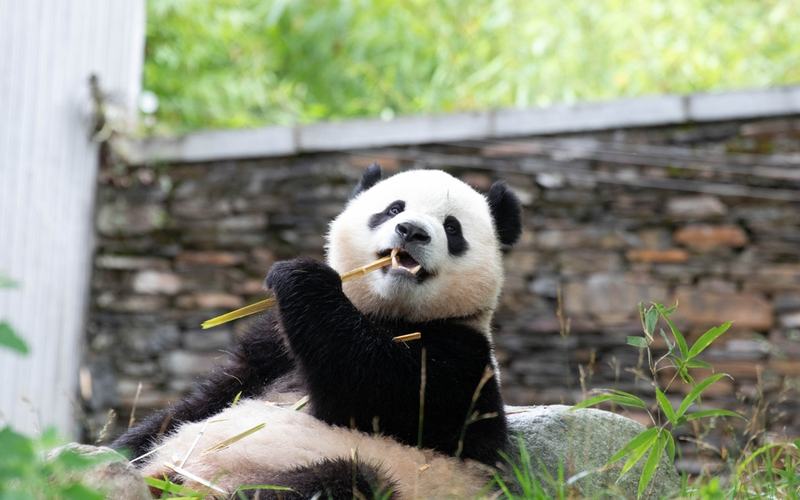
China announced Friday it will send two giant pandas to Zoo Atlanta as part of a new long-term conservation partnership, continuing a decades-long practice of wildlife exchanges with the United States.
The China Wildlife Conservation Association said male panda Ping Ping and female panda Fu Shuang, both from the Chengdu Research Base of Giant Panda Breeding, will participate in a 10-year cooperative program focused on conservation and research. The agreement with Zoo Atlanta was signed last year.
Chinese officials said preparations are underway in the United States, including facility upgrades designed to ensure a safe and suitable habitat for the animals. Experts from China have also provided technical guidance during the preparation process.
The announcement comes weeks before a planned visit by Donald Trump to China, where he is expected to meet with Chinese President Xi Jinping and discuss a range of issues, including trade and bilateral relations.
Zoo Atlanta leadership said the organization is prepared to receive the animals and resume its role in panda conservation efforts. The zoo previously hosted giant pandas under an earlier agreement that ended in 2024, during which multiple cubs were born.
China’s Foreign Ministry said the new arrangement is intended to support conservation research, improve animal health outcomes, and promote scientific collaboration between the two countries.
Giant pandas have long been used by Beijing as part of its international outreach strategy, with similar agreements established with zoos around the world. The practice dates back to the early 1970s, when China first sent pandas to the United States following a thaw in diplomatic relations.
Under the new agreement, both countries are expected to collaborate on research topics including disease prevention, breeding, and habitat preservation, as well as broader biodiversity efforts.
The International Union for Conservation of Nature currently classifies giant pandas as a vulnerable species, reflecting improvements in population levels after years of conservation initiatives.

Comments
No comments yet. Be the first to share your thoughts.