
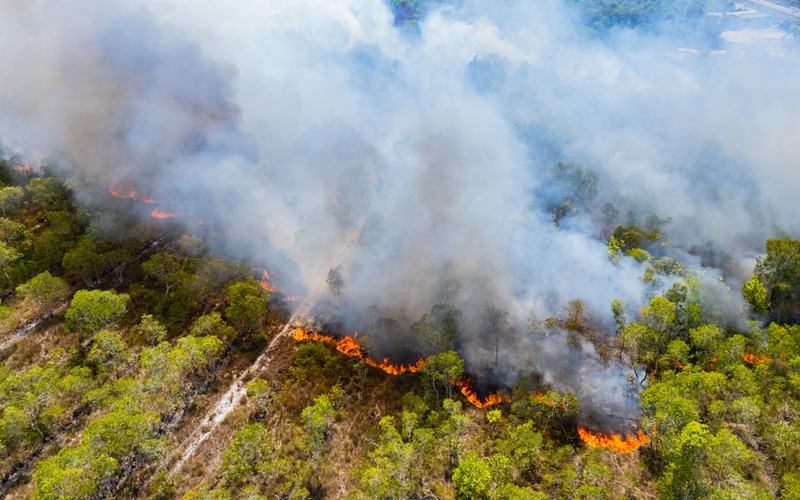
Twenty-four large wildfires scorched 80,857 acres across the United States as of Thursday, according to the latest update from the National Interagency Fire Center. The nation remained at Preparedness Level 2, with firefighters monitoring dry conditions in the Southeast and potential fire weather threats in the Southwest and Plains.
The most intense activity centered in the Southeast, where drought and high winds fueled rapid fire growth. In Georgia, the Pineland Road Fire in Clinch and Echols counties exploded to 29,606 acres at only 10% containment, prompting evacuations in the Fruitland community. Nearby, the Highway 82 Fire in Brantley County grew to 4,438 acres with 15% containment and destroyed at least 42 structures. Together, these two blazes alone exceeded 34,000 acres, contributing to reports of over 35,000 acres burned in recent Georgia wildfires.
Florida faced similar challenges, with 137 active wildfires burning more than 25,000 acres statewide as of early Thursday. Key incidents included the MM 45 Broward 06 Fire at 9,200 acres and 50% contained, the 139 Fire at 6,499 acres and 50% contained, and the Railroad Fire at 4,186 acres and 55% contained. Smoke from these fires drifted across the state, impacting air quality and visibility.
Year-to-date through April 23, the U.S. had seen 22,503 wildfires burn 1,793,550 acres, surpassing the 10-year average of 14,780 fires and 951,582 acres by a wide margin. Earlier in the season, massive blazes in Nebraska, such as the Morrill Fire that burned 642,029 acres in March, set records and highlighted the unusually active start to 2026.
Fire officials attributed the surge to persistent drought affecting much of the Southeast, low humidity, and strong winds challenging containment efforts. Georgia declared a statewide state of emergency in response to the spreading blazes. No fatalities were reported from the current active fires, though evacuations continued in affected areas.
Looking ahead, fire managers warned of elevated to critical fire weather conditions in parts of the Southwest and central Plains due to strong winds and low humidity. Very dry fuels persisted in the Southeast, with a warming trend noted in Alaska and drier conditions in Hawaii. AccuWeather forecasted a severe season overall, predicting 65,000 to 80,000 wildfires burning 5.5 to 8 million acres nationwide.
Efforts to combat the fires involved thousands of personnel nationwide, with resources stretched amid the early-season intensity. Officials urged residents in fire-prone areas to prepare for potential evacuations and avoid activities that could spark new blazes.

Comments
No comments yet. Be the first to share your thoughts.