
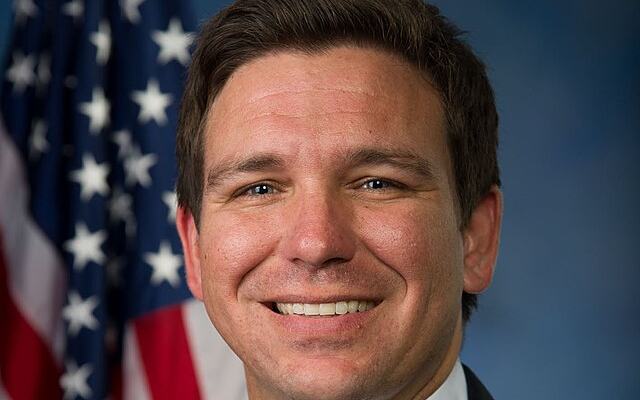
Florida Governor Ron DeSantis signed a new congressional redistricting map into law on Monday, a move that analysts project could expand the state's Republican U.S. House delegation from 20 seats to 24 out of 28. DeSantis announced the signing on social media with the phrases "Signed, Sealed, and Delivered" and "Promise made, promise kept."
The map passed the Republican-controlled Florida Legislature last week during a special session. The state House approved it 83-28 along party lines, while the Senate passed it 21-17, with four Republicans voting against. DeSantis had proposed the plan on April 27, just before the session began, following his January call for lawmakers to address congressional boundaries.
Currently, Florida sends 20 Republicans and seven Democrats to Congress, with one Democratic seat vacant after Rep. Sheila Cherfilus-McCormick's resignation. The new lines target several Democratic-held districts, including those of Reps. Kathy Castor in Tampa, Darren Soto in Orlando, Lois Frankel in West Palm Beach, and Debbie Wasserman Schultz in Weston. It also complicates reelection for Rep. Jared Moskowitz in Parkland and affects the vacated South Florida seat.
DeSantis justified the mid-decade redistricting by citing population growth since the 2020 census, which he claims undercounted Florida, and a shift to a 1.5 million Republican voter registration advantage. He argued that recent U.S. Supreme Court rulings, including one narrowing the Voting Rights Act, and a Florida Supreme Court decision on the 2022 map, render the state's Fair Districts amendments, voter-approved bans on partisan and racial gerrymandering, unenforceable. "Drawing maps based on race... is unconstitutional," DeSantis stated.
House Speaker Mike Johnson endorsed the effort, stating Florida "has the right to do so." The map, drawn by DeSantis aide Jason Poreda, was described as "race neutral" despite incorporating partisan data.
Democrats decried the plan as an unconstitutional power grab. House Democratic Leader Hakeem Jeffries declared, "See you in court." Florida Democratic Party Chairwoman Nikki Fried called the legal argument "asinine." State Rep. Angie Nixon protested on the House floor with a bullhorn, shouting that the vote was "out of order." Voting rights groups and Democrats plan immediate lawsuits, arguing violations of the state constitution's anti-gerrymandering provisions.
The changes position Florida as a key battleground in national redistricting efforts ahead of the 2026 midterms, where Republicans seek to maintain their narrow House majority. Secretary of State Cord Byrd adjusted congressional primary qualifying to June to accommodate the new map. Some Republicans, including four senators who opposed it, expressed concerns over potential overreach or backfire risks.

Comments
No comments yet. Be the first to share your thoughts.