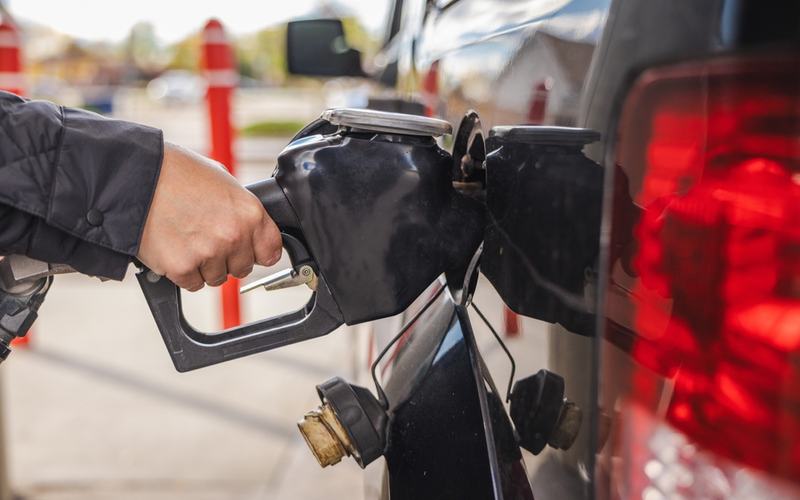
The national average price for regular gasoline rose to $4.48 per gallon on Tuesday, according to AAA data. This marked the highest level for this time of year since the Iran war started in late February.
Crude oil prices contributed to the pump price surge, with West Texas Intermediate (WTI) crude settling around $102 per barrel after dipping from recent highs. Brent crude topped $126 per barrel last week, its highest level since the war's outset, before pulling back amid ongoing tensions in the Middle East. The conflict disrupted oil flows through the Strait of Hormuz, which Iran has blocked, sparking fears of prolonged supply shortages.
Gasoline prices have climbed nearly 30 cents in the past week alone, pushing the national average up from $4.03 a week ago. Since the war began on February 28, prices have jumped about 40% to 50%, or roughly $1.20 to $1.50 per gallon in many areas. States in the West and Northeast have seen the sharpest increases, with some regions approaching $5 per gallon.
The rapid rise stems directly from the Iran war's impact on global oil markets. Brent crude has surged more than 55% since hostilities erupted, peaking near $120 before recent volatility. Refining bottlenecks and higher wholesale costs have amplified the effect at U.S. pumps, even as domestic production remains strong. Analysts note that while America leads in oil output, global benchmarks dictate retail prices.
Consumers face added pressure heading into the summer driving season. The average household could spend $857 more on fuel this year compared to pre-war levels. Inflation data for March already reflected the strain, with energy costs fueling broader price pressures.
Efforts to resolve the conflict show little progress, keeping markets on edge. Tehran continues to restrict the Strait of Hormuz, a chokepoint for about 20% of global oil trade. Oil majors like Aramco stand to gain billions from sustained high prices, estimated at $25.5 billion in war-related profits if averages hold near $100.
AAA advises drivers to seek savings through apps and loyalty programs amid the uncertainty. Prices may ease if diplomatic breakthroughs occur or U.S. strategic reserves are tapped, but experts predict elevated levels through 2026.

Comments
No comments yet. Be the first to share your thoughts.