
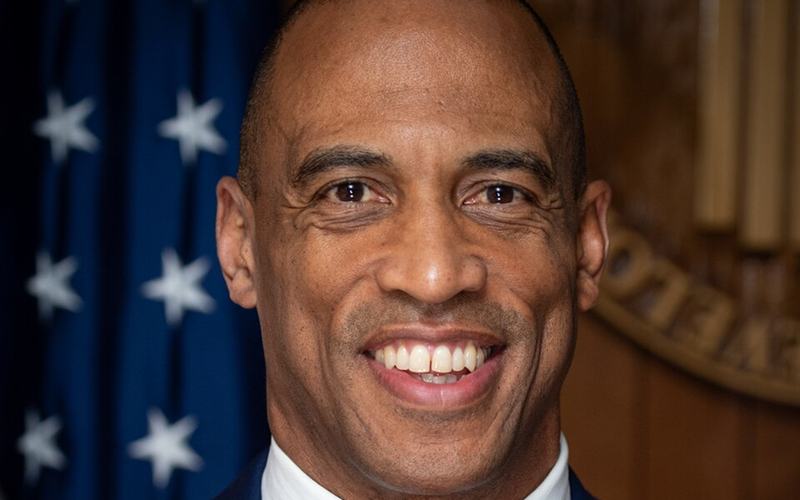
HUD Secretary Scott Turner stated that only the Republican Party is prepared to address America's affordable housing challenges.
The remarks come amid ongoing efforts by the Trump Administration to reduce regulatory burdens on housing development. On September 1, Turner announced the rescission of an Obama-era policy interpretation that had imposed significant compliance costs on multifamily property owners, estimated at over $110 million in recent years. These costs were ultimately passed on to homebuyers and renters.
Turner highlighted the administration's focus on expanding housing supply through deregulation rather than increased government intervention. He noted that previous policies contributed to rising home prices and limited construction.
Under Turner's leadership since February 2025, HUD has prioritized actions such as halting enforcement of certain gender identity rules in federally funded housing, emphasizing biological sex instead. The department has also targeted waste, fraud, and abuse in public housing programs while promoting homeownership opportunities.
Turner has pointed to states like Florida and Texas as models for pro-development policies that ease barriers to building new homes. These approaches contrast with stricter regulatory environments in other parts of the country.
The secretary's comments point to a broader Republican strategy of cutting red tape to lower costs and increase supply. Recent HUD moves include setting a one-year statute of limitations on certain fair housing construction complaints to avoid indefinite liability for builders.
Critics from fair housing groups have raised objections to the regulatory rollbacks. However, administration officials maintain that the changes align with congressional intent and court rulings, aiming to restore affordability without expanding federal oversight.
Turner has also discussed strategies for addressing homelessness, favoring partnerships between local governments and nonprofits over a strict housing-first model. Visits to cities like Houston and Dallas have showcased collaborative efforts in those areas.
These initiatives reflect the administration's emphasis on market-driven solutions and state-level innovation to make housing more accessible for American families.

Comments
No comments yet. Be the first to share your thoughts.