
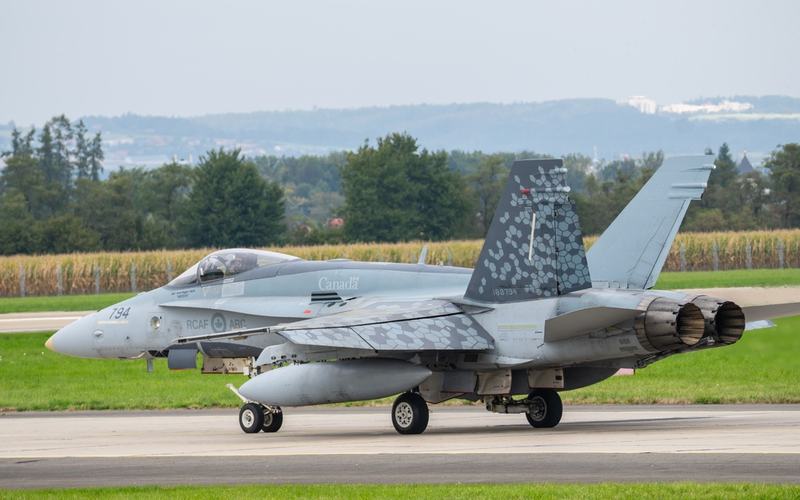
NATO fighter jets intercepted Russian strategic bombers and fighter aircraft flying over the Baltic Sea on Monday in a routine but robust display of alliance air power.
French Rafale fighters stationed at Siauliai Air Base in Lithuania scrambled alongside aircraft from Sweden, Finland, Poland, Denmark, and Romania to inspect and shadow the Russian formation. The mission involved approximately 10 NATO jets responding to two supersonic Tu-22M3 long-range bombers escorted in turns by around 10 Su-30 and Su-35 fighters. The Russian flight lasted more than four hours over the neutral waters of the Baltic Sea.
The French detachment, part of NATO's Baltic Air Policing mission, confirmed the Rafales were armed with air-to-air missiles and launched within minutes of detection. Crews, consisting of a pilot and navigator per jet, were on constant standby. A journalist observed the rapid response at the Lithuanian base, where engines were ignited before takeoff clearance.
Russia's Defense Ministry described the bombers' route as a scheduled operation in full compliance with international airspace rules. "Crews of long-range aviation regularly conduct flights over the neutral waters of ... the Baltic ... Seas," it stated on Telegram. The ministry noted foreign fighters accompanied the aircraft at certain stages but reported no issues.
No airspace violations occurred during Monday's incident, but Lithuania's defense ministry highlighted a pattern of Russian non-compliance. NATO jets scrambled four times between April 13 and 19 to intercept aircraft that turned off transponders, failed to communicate or omitted flight plans. Such lapses prompt NATO responses to safeguard alliance airspace.
The Baltic Air Policing mission, launched in 2004 after Estonia, Latvia, and Lithuania joined NATO, ensures peacetime air defense over the region. Many monitored Russian flights connect the exclave of Kaliningrad to mainland Russia. NATO conducted about 300 interceptions annually in northern European airspace even before Russia invaded Ukraine, with numbers rising since 2022 amid heightened tensions.
These encounters underscore NATO's vigilance on its eastern flank. While routine, they signal readiness against potential provocations as Russia maintains a military presence near the Baltic states. No injuries or further escalations were reported from the Monday operation.

Comments
No comments yet. Be the first to share your thoughts.