
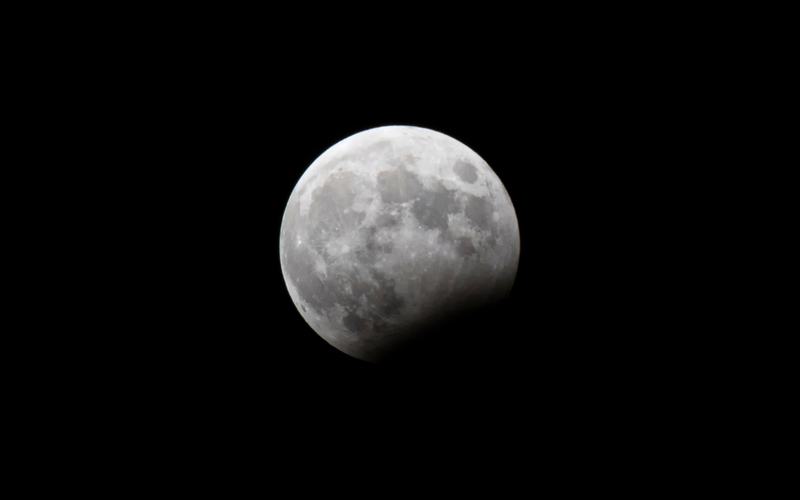
A deep partial lunar eclipse is set to captivate skywatchers across much of the United States on the night of Thursday, August 27, into the early hours of Friday, August 28. At its peak, approximately 96 percent of the Moon will pass through Earth's dark umbral shadow, creating an effect very close to a total eclipse and often described as an "almost blood moon."
The eclipse begins with the Moon entering the penumbra around 9:23 p.m. EDT on Thursday. The partial phase starts at 10:33 p.m. EDT, with maximum coverage at 12:12 a.m. EDT on Friday. The partial phase ends at 1:52 a.m. EDT, and the event concludes around 3:03 a.m. EDT. Times shift earlier in western time zones, with maximum eclipse occurring at 11:12 p.m. CDT, 10:12 p.m. MDT, and 9:12 p.m. PDT on Thursday.
The entire Americas receive a view of the event, which lasts more than five hours overall, though the noticeable partial phase spans about three hours and 18 minutes. Eastern and central regions see the full sequence with the Moon high in the sky, while western areas observe it beginning around or shortly after moonrise. All 50 states can view at least part of the eclipse.
No special equipment is required, as the event is safe to observe with the naked eye. The shadowed portion of the Moon typically takes on a dusky red or orange hue due to sunlight refracted through Earth's atmosphere. Clear skies will enhance visibility, and the Sturgeon Moon provides a bright full Moon backdrop before the shadow advances.
This marks the last lunar eclipse of such depth visible in the Americas until 2029. It follows a total solar eclipse earlier in August, highlighting a busy eclipse season for 2026. Weather permitting, the spectacle offers a striking celestial display without the need for travel or advanced preparation.

Comments
No comments yet. Be the first to share your thoughts.