
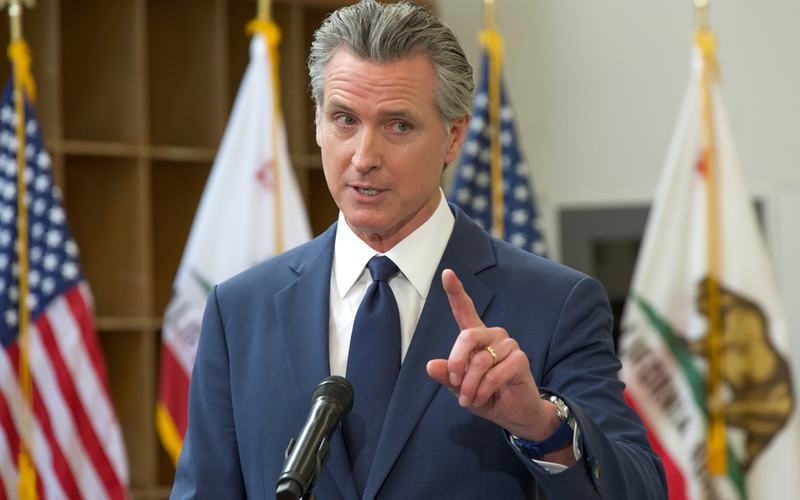
California Governor Gavin Newsom wants to distance himself from Elon Musk amid deepening political rifts, but Tesla's stronghold in the state's zero-emission truck market makes separation difficult.
Newsom has ramped up attacks on Musk during President Donald Trump's second term, slamming the Tesla CEO for his role in reshaping the federal government and backing conservative figures worldwide, including Italian Prime Minister Giorgia Meloni and Germany's far-right AfD party. The feud includes barbs over California's policies on wildfires, immigration, and transgender rights. Last month, Newsom labeled Musk "one of the great disappointments" of the era for pivoting Tesla from electric vehicles to artificial intelligence and humanoid robots, accusing him of ceding the EV market to China, which controls 70 percent globally.
Their once-friendly relationship soured after Musk's rightward shift. Newsom once praised Musk as this generation's Thomas Edison and highlighted $3.2 billion in state subsidies that fueled Tesla's growth. In 2023, they appeared together at a Palo Alto event, joking about Newsom's early Tesla Roadster deposit. Musk even donated to Newsom's 2018 campaign. Tensions peaked when Musk endorsed Trump in 2024, poured $277 million into Republicans, and relocated X and SpaceX headquarters to Texas, citing a California law on school gender notifications that Newsom signed.
Musk's political evolution has hurt Tesla's passenger car sales among liberal California buyers, with market share plummeting as the overall EV market rebounds. Newsom threatened in late 2024 to exclude Tesla from a proposed state EV rebate program, though he later outlined a $200 million incentive plan benefiting EV makers, including Tesla.
Tesla remains vital to California's economy and climate agenda. The company maintains factories and tens of thousands of workers in the state, its largest U.S. market, despite the Texas headquarters move. Crucially, the Tesla Semi electric big rig captured 90 percent of 1,067 state vouchers for zero-emission trucks awarded last year, outpacing all competitors combined since 2021. Priced at a median $290,000, half that of rivals like Volvo and Kenworth, with a 500-mile range double that of competitors, the Semi promises mass rollout this fall alongside expanded charging networks.
Fleet operators prioritize economics over politics. High Logistics CEO Rudy Diaz compared the Semi to the iPhone's disruption, noting its potential to displace diesel trucks amid volatile fuel prices tied to the Iran-linked oil crisis. Forum Mobility's Adam Browning called it a "step change advance." The truck supports California's 2036 diesel phase-out, especially after Trump's 2025 revocation of the state's electric truck mandate, and could cut pollution in ports and the Central Valley.
Environmental advocates emphasize results over personalities. Environmental Defense Fund's Katelyn Roedner Sutter stressed the impact of zero-emission trucks on local air quality. Yet concerns linger about Tesla's market dominance stifling competition, with former regulators urging support for startups. International Council on Clean Transportation's Ray Minjares predicted that economics alone will drive transformation.
Newsom's push collides with Tesla's practical indispensability, underscoring the tension between politics and California's green ambitions.

Comments
No comments yet. Be the first to share your thoughts.