
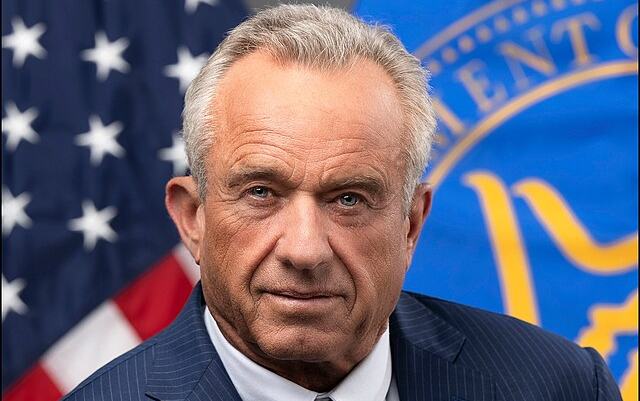
Health and Human Services Secretary Robert F. Kennedy Jr. has withheld $600 million in congressionally appropriated funds destined for the global vaccine group Gavi, citing safety concerns over ingredients like thimerosal in vaccines provided to low-income countries.
The funds, which cover contributions for the current and previous fiscal years, support Gavi's efforts to deliver vaccines against 20 diseases, including measles, malaria, and polio, to more than 50 low-income nations. They represent about 15 percent of Gavi's overall budget and were set to procure vaccines manufactured largely in the United States. If not released, the money will expire on September 30.
Kennedy's decision stems from his long-standing objections to thimerosal, a mercury-containing preservative used in multi-dose vials of certain Gavi vaccines, such as the pentavalent shot combining diphtheria, tetanus, pertussis, hepatitis B, and Haemophilus influenzae type B protection. About 14 percent of Gavi's vaccine portfolio includes thimerosal to prevent contamination in settings with limited refrigeration.
The United States phased thimerosal out of most childhood vaccines by 2001 as a precautionary measure, though federal health agencies like the CDC maintain it poses no risk at approved levels and is ethylmercury, distinct from more toxic methylmercury. Kennedy, who detailed concerns in his 2014 book Thimerosal: Let the Science Speak, views it as a potential neurotoxin linked to autism and other issues—a claim rejected by major scientific bodies including the WHO.
In recent Senate testimony, Kennedy highlighted broader worries, including Gavi's use of a whole-cell diphtheria-tetanus-pertussis (DTP) vaccine discontinued in the U.S. in 1997 after studies linked it to rare brain injuries. "They’re still giving it to 161 million African and Asian children a year," he said, noting Gavi's refusal to switch to a newer acellular version or provide detailed data on U.S. fund usage.
The standoff builds on earlier actions: In June 2025, Kennedy cut $300 million in funding, and in January 2026, the administration conditioned further support on Gavi phasing out thimerosal—a demand Gavi has resisted, citing the preservative's necessity for cost-effective distribution in resource-poor areas and decades of safety data.
Gavi CEO Sania Nishtar warned that the funding gap, alongside cuts from other donors, threatens programs like malaria vaccination, which has delivered 39 million doses across 25 African countries. She estimated tens of thousands of preventable child deaths. Former Gavi head Seth Berkley argued that without thimerosal-enabled multi-dose vials, many children would forgo vaccinations altogether due to logistical hurdles.
Congressional Republicans have expressed mixed views. Senate Appropriations Chair Susan Collins plans to urge Secretary of State Marco Rubio to release the funds per legislative intent, praising Gavi's role in vaccinating over one billion children and boosting U.S. vaccine exports worth $12.5 billion. Democrats like Sen. Jeanne Shaheen pressed Kennedy directly to resolve the issue.
The State Department, which formally oversees Gavi funding, has aligned with HHS and tied future contributions to vaccine safety reforms. Kennedy's moves reflect his 'Make America Healthy Again' push to scrutinize vaccine ingredients and ensure transparency from international partners, even as domestic efforts face legal setbacks, including a recent court ruling invalidating some thimerosal phase-outs for procedural reasons.

Comments
No comments yet. Be the first to share your thoughts.