
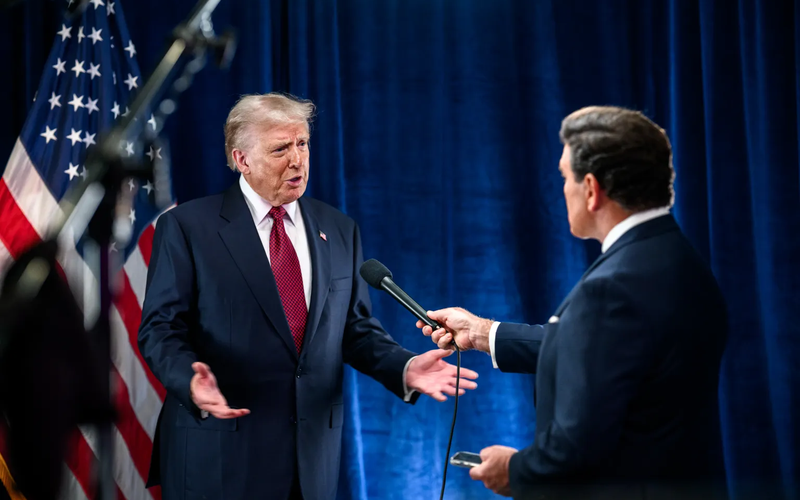
President Donald Trump stated Thursday that he would 'probably' withdraw American troops from Italy and Spain, expanding threats against NATO allies unwilling to back U.S. efforts in the ongoing conflict with Iran.
Speaking in the Oval Office to The Center Square reporter Sarah Roderick-Fitch, Trump responded to a question about troop reductions in the two countries by saying, "Yeah, probably, I probably will. Why shouldn't I? Italy has not been of any help to us, and Spain has been horrible, absolutely horrible."
The remarks came a day after Trump indicated the U.S. was studying cuts to its 36,000 troops in Germany amid similar complaints about allied support. As of late 2025, the U.S. maintained about 12,662 active-duty personnel in Italy and 3,814 in Spain.
Tensions stem from a U.S.-Israeli air campaign against Iran that began on February 28, 2026, which led to the closure of the Strait of Hormuz and disruptions in global oil shipping. Trump has repeatedly criticized European allies for refusing to contribute naval forces to reopen the strait or assist in military operations.
Spain denied U.S. requests to use its Rota Naval Station and Morón Air Base for strikes on Iran, prompting Trump last month to threaten a full trade embargo. Italy similarly blocked U.S. aircraft from landing at Naval Air Station Sigonella in Sicily en route to Middle East missions.
Key U.S. installations include Rota, home to a destroyer squadron and rotational forces, and Morón, supporting airlift operations, in Spain. In Italy, Aviano Air Base hosts F-35 fighters, while Sigonella serves as a Mediterranean hub for naval aviation.
Trump's comments broaden a Pentagon review of troop deployments in Europe, where the U.S. has over 68,000 active-duty personnel. He has floated suspending non-cooperative nations from NATO and even full U.S. withdrawal, though congressional restrictions limit such moves.
Italian Defense Minister Guido Crosetto expressed confusion over the threats, stating Italy does not understand the rationale. Spanish officials have remained calm, citing ongoing base agreements.
The dispute highlights fractures in the alliance, with Trump arguing that allies must share defense burdens more equitably, especially during crises like the Iran conflict.

Comments
No comments yet. Be the first to share your thoughts.