
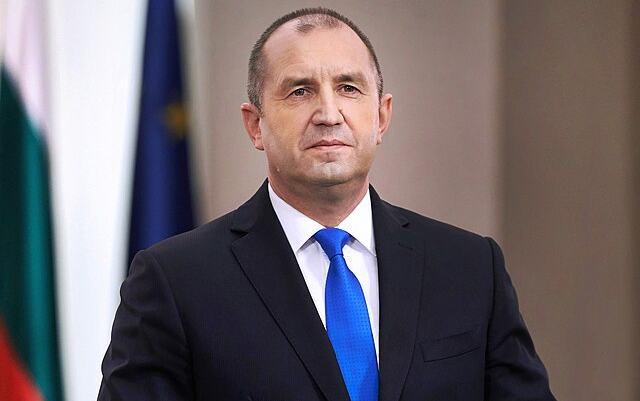
Bulgarians cast ballots on Sunday in the country's eighth parliamentary election since 2021, marking another chapter in a prolonged political crisis fueled by corruption allegations and government collapses. Polls showed former President Rumen Radev's newly formed Progressive Bulgaria alliance leading with around 35% support, well ahead of former Prime Minister Boyko Borisov's GERB party at about 18%.
The snap vote followed the December 11, 2025, resignation of Prime Minister Rosen Zhelyazkov's government amid mass protests by hundreds of thousands, primarily young people, demanding judicial independence and an end to graft. Since anti-corruption demonstrations erupted in 2021, Bulgaria has struggled to form stable coalitions, with no government lasting more than a year. Pollsters forecasted turnout near 60%, up sharply from 34% in the previous June 2024 vote.
Radev, an ex-air force general who served as president from 2017 until resigning in January 2026 to enter politics, launched Progressive Bulgaria as a three-party alliance. He has campaigned on anti-corruption reforms and ending 'oligarchic governance,' drawing strong backing from older and rural voters frustrated with endless instability. After voting, Radev called for 'a path to democratic, modern European Bulgaria' while expressing hopes for 'practical relations with Russia based on mutual respect.' Critics highlight his pro-Russian stance, including opposition to military aid for Ukraine and a desire to resume Russian energy imports.
GERB-SDS, led by Borisov, polled second in recent surveys, followed by parties like We Continue the Change-Democratic Bulgaria (PP-DB), the Movement for Rights and Freedoms (DPS), Revival, and the Bulgarian Socialist Party (BSP). A fragmented parliament remains likely, as no single bloc has secured a 121-seat majority since the crisis began. Polls from mid-April varied, with some showing GERB at 19-21% and PP-DB around 11%, but Radev's grouping consistently ahead in the latest tallies.
Voters expressed exhaustion with the cycle. 'Politicians need to come together and make decisions,' said one Sofia resident, while another lamented, 'The state is basically falling apart.' The election carries weight for Bulgaria's European Union path, including access to recovery funds stalled by rule-of-law concerns.
Polls closed at 8 p.m. local time, with exit polls and preliminary results expected later Sunday or Monday. A Radev victory could shift Sofia toward warmer Moscow ties, testing EU unity amid ongoing geopolitical tensions.

Comments
No comments yet. Be the first to share your thoughts.