
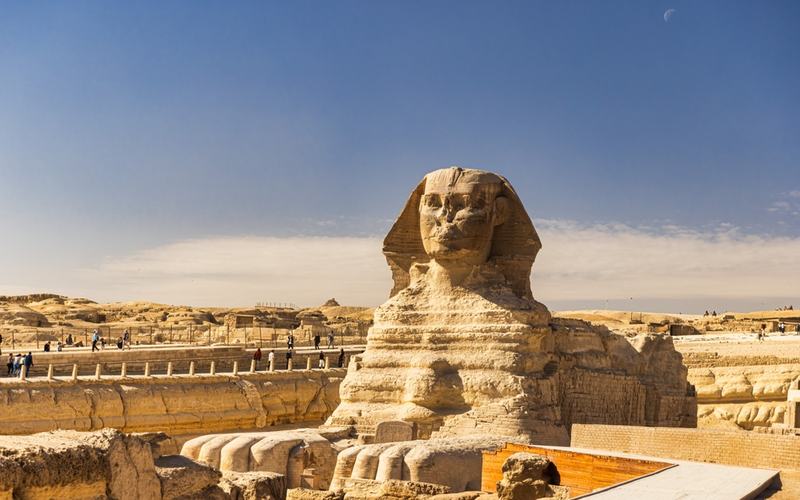
Italian researchers are drawing renewed attention after claiming satellite radar scans may indicate the presence of a second Sphinx-like structure buried beneath the sands of the Giza Plateau, a finding that, if confirmed, could significantly reshape understanding of the ancient site.
Filippo Biondi, who has been analyzing radar data, said in a recent podcast interview that imaging technology capable of detecting underground vibration patterns identified what appears to be a roughly 180-foot mound of hardened sand beneath the plateau. The claims were first reported by the Daily Mail.
According to the report, the scans reportedly show vertical formations and linear structures that researchers interpret as possible shafts or passageways, along with dense geometric patterns that some believe could indicate constructed underground walls rather than natural formations.
The area identified in the analysis is described as aligning in a symmetrical layout with the broader Giza complex, which includes the Great Pyramids and the Great Sphinx of Giza. Supporters of the theory argue that this alignment could suggest intentional mirroring in the ancient site’s design.
Biondi said the team has identified what he called a strong geometric correlation in the subsurface data, though he emphasized the findings are not yet definitive, estimating confidence at roughly 80 percent.
The theory has also been linked to interpretations of the so-called Dream Stele, a monument located between the paws of the Great Sphinx that depicts dual sphinx figures, an element some researchers have pointed to in speculation about a possible second structure.
Biondi suggested that if a second sphinx exists, it may lie beneath a raised section of terrain composed of compacted sand rather than exposed bedrock, which could explain why it has not been previously identified.
The claim is not widely accepted in mainstream Egyptology, but it is not the first time the idea has been raised. Some researchers, including Egyptologist Bassam El Shammaa, have previously suggested ancient texts and legends may hint at a second sphinx that was later destroyed or lost.
At present, the theory remains unverified, and no excavation has been conducted to confirm the presence of any buried monumental structure at the site. Archaeologists continue to caution that radar interpretations can be subject to ambiguity, particularly in complex geological environments like the Giza plateau.

Comments
No comments yet. Be the first to share your thoughts.