
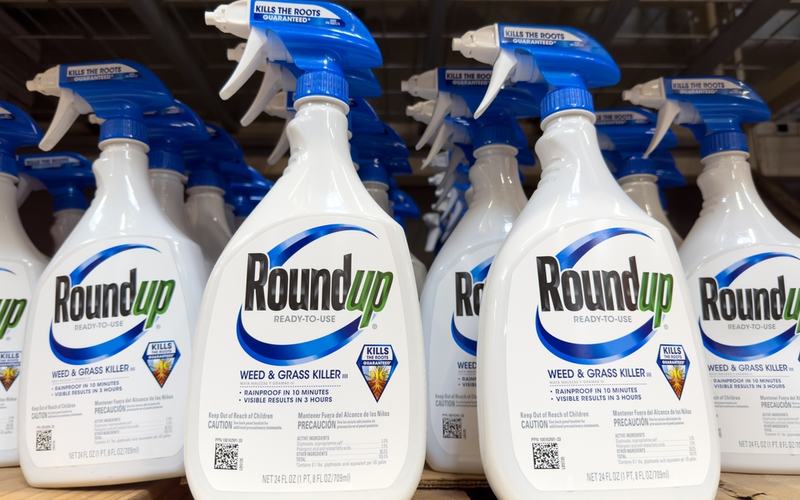
The Supreme Court heard oral arguments Monday in a case that could determine whether consumers can pursue lawsuits against pesticide manufacturers over alleged health risks linked to widely used weed killers, including Roundup.
The case centers on whether state-level “failure-to-warn” claims against companies such as Monsanto are preempted by federal law governing pesticide labeling under the Insecticide, Fungicide, and Rodenticide Act, which is regulated by the Environmental Protection Agency.
Monsanto is appealing a $1.25 million jury verdict awarded to a plaintiff who claimed the company failed to adequately warn about alleged cancer risks associated with Roundup, a glyphosate-based herbicide. The company argues that federal law prevents states from imposing additional labeling requirements beyond EPA-approved warnings.
During Monday’s arguments, justices questioned both sides of the dispute, with no clear indication of how the court may ultimately rule. Justice Brett Kavanaugh was among those noted as expressing skepticism toward the plaintiff’s position, according to reports from the courtroom.
The plaintiff’s attorney argued that federal law does not shield manufacturers from liability for misleading or insufficient warnings and does not prevent courts from hearing state tort claims involving product safety disclosures.
The outcome could have broad national implications, potentially affecting thousands of similar lawsuits filed across the country alleging links between Roundup exposure and non-Hodgkin lymphoma.
Monsanto, now owned by Bayer, has also proposed a broader settlement strategy aimed at resolving existing and future Roundup-related claims. The company has said the plan includes capped annual payments over as many as 21 years, potentially totaling up to $7.25 billion, pending court approval.
Company leadership has said the settlement effort is intended to reduce long-term litigation uncertainty while the Supreme Court case addresses whether additional claims can proceed under state law. Bayer CEO Bill Anderson has described the settlement and the litigation strategy as complementary approaches to resolving ongoing legal exposure.
Monsanto has denied any admission of liability or wrongdoing in connection with Roundup, maintaining that federal regulatory approval governs its product labeling standards.

Comments
No comments yet. Be the first to share your thoughts.