
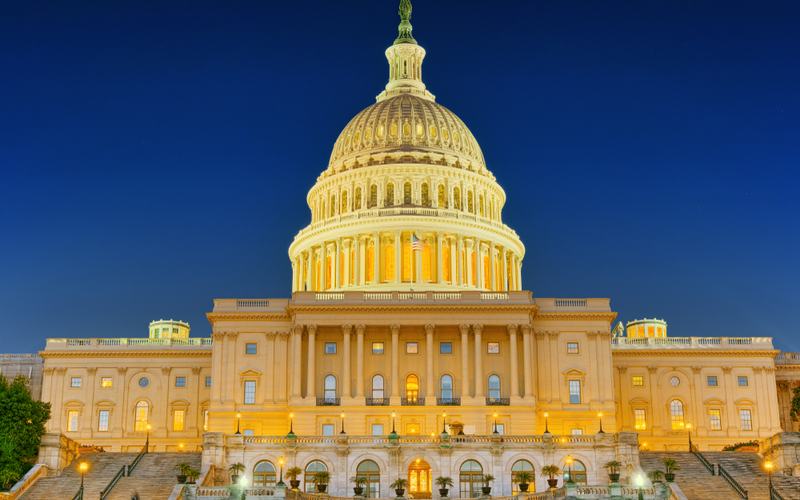
The U.S. Senate deadlocked over President Donald Trump's top legislative priority, the SAVE America Act, failing to advance the bill last week and leaving it stalled amid partisan divisions.
The Safeguard American Voter Eligibility (SAVE) America Act, formally H.R. 7296 in the 119th Congress, requires individuals to provide documentary proof of U.S. citizenship when registering to vote in federal elections. Acceptable documents include a REAL ID-compliant identification, a passport, a birth certificate paired with photo ID, or military records. The legislation directs states to use federal databases like the Department of Homeland Security's SAVE system to verify citizenship and remove non-citizens from voter rolls. It also imposes criminal penalties on election officials who register applicants without proof and allows private lawsuits against violators.
The House of Representatives passed the bill on February 11, 2026, sending it to the Republican-controlled Senate for consideration. President Trump has aggressively championed the measure, urging senators via Truth Social to pass it and warning he would oppose Republicans who vote against it. The White House launched a dedicated page, saveamerica.gov, mapping senators' offices and mobilizing public pressure for swift enactment to protect election integrity.
Senate Republicans initiated a marathon debate in mid-March, voting 51-48 to begin extended consideration. The effort topped 50 votes at times but repeatedly faltered on cloture motions needed to limit debate, with one recent failure recorded at 53-47. On April 20, the chamber again failed to advance the legislation, marking the second such setback after a similar stall the previous year.
Democrats have uniformly opposed the bill, labeling it a voter suppression measure that could disenfranchise millions of eligible Americans lacking easy access to required documents, such as married women with name changes or rural residents. Senate Democrats vowed to give the bill "the death it deserves," arguing it disrupts longstanding voter registration drives and online processes. Civil rights groups like the Southern Poverty Law Center celebrated the latest failure, stating it preserves voting rights for now.
GOP leaders expressed frustration, with some acknowledging privately that the bill lacks the 60 votes needed to overcome a filibuster. Senate Minority Leader John Thune faced pressure from Trump allies planning floor takeovers to force a vote. Proponents argue the reform addresses rare but real instances of non-citizen voting, aligning the U.S. with international standards where most democracies require citizenship proof.
As the Senate recesses, the bill's fate remains uncertain ahead of the 2026 midterms. Conservative outlets like the Heritage Foundation urged Congress to explore alternative paths, such as investigations into state election practices under its constitutional authority. Meanwhile, several GOP-led states have enacted similar proof-of-citizenship laws independently.

Comments
No comments yet. Be the first to share your thoughts.