
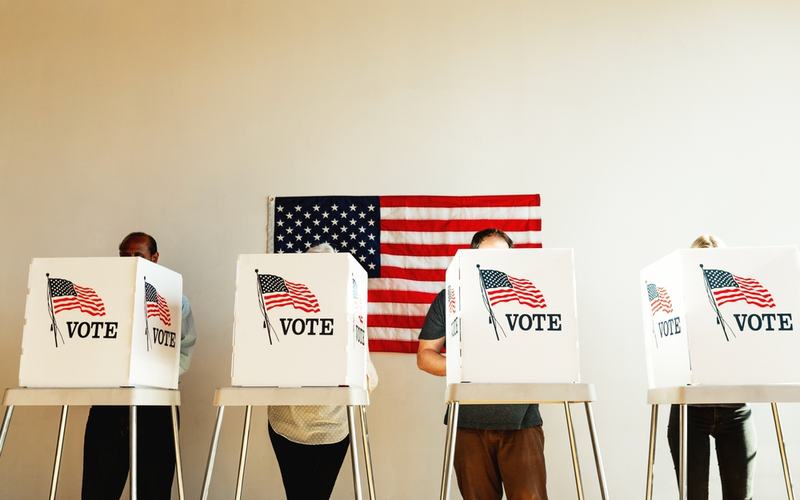
A ballot initiative requiring voter identification in California qualified for the November 3 general election after the Secretary of State's office confirmed sufficient valid signatures on Friday.
The California Voter Identification, Citizenship Verification, and Registered Voter List Administration Initiative would amend the state constitution to mandate government-issued photo ID for in-person voting or the last four digits of such an ID designated at registration for mail ballots. The state would provide free voter ID cards upon request. County officials would verify citizenship using available government data, maintain accurate voter rolls, and report annual verification rates. The State Auditor would conduct compliance audits every odd-numbered year.
Proponents, led by former Assemblymember Carl DeMaio through Reform California and Californians for Voter ID, submitted 1,367,961 signatures on March 2. A random sampling showed 80.2% validity, projecting 1,097,378 valid signatures exceeding the 874,641 required, or 8% of votes in the last gubernatorial election. Sponsors include Republican lawmakers such as State Sen. Tony Strickland and State Reps. Bilal Essayli, Alexandra Macedo, and David Tangipa, along with donors like Richard Uihlein.
"Voter ID is simply a common-sense policy," stated Julie Luckey, director of Californians for Voter ID. "Thirty-six states in the U.S. have implemented some form of voter identification requirement," DeMaio emphasized, restoring public trust in elections amid concerns over integrity.
The push follows failed legislative efforts, including DeMaio's AB 25 last year. Nationally, the measure aligns with Republican priorities, including President Trump's SAVE America Act, as 36 states require some ID at the polls.
Opponents, including the ACLU, League of Women Voters, and Disability Rights California, argue that it creates barriers for poor, minority, elderly, and disabled voters. "This voter ID measure is not about protecting voters; it is about importing election lies," said Jenny Farrell of the League of Women Voters. Angelica Salceda of the ACLU noted that existing verification already exists.
A March UC Berkeley Institute of Governmental Studies poll of over 5,000 registered voters found 44% support, 45% opposition, and 12% undecided. Support rose to 56% when described neutrally but fell when framed as potential suppression.
California currently requires no ID at the polls; voters attest to citizenship under penalty of perjury. Voter fraud remains rare, but proponents cite public demand for safeguards. The campaign raised $10 million, while opponents lag at $270,000.
Strickland predicted a strong bipartisan appeal but warned of heavy opposition spending. The measure, filed July 16, 2025, marks a rare GOP success in qualifying a statewide initiative in deep-blue California.

Comments
No comments yet. Be the first to share your thoughts.