
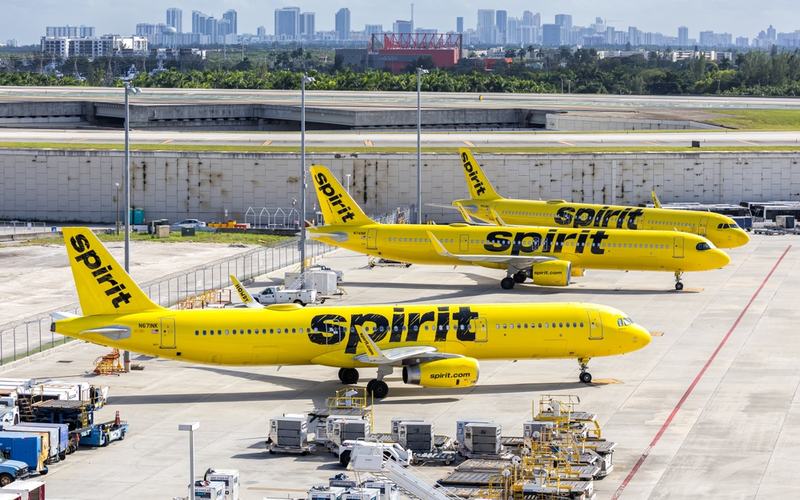
The Trump administration has explored using the Defense Production Act to facilitate a federal takeover of Spirit Airlines, repurposing part of the bankrupt carrier's fleet for transporting U.S. troops, military cargo, and other defense missions.
Under the proposed plan, the government would lend Spirit $500 million at a favorable interest rate, positioning itself as the senior creditor in the airline's Chapter 11 bankruptcy proceedings. In exchange, the federal government would receive warrants for up to 90 percent ownership of the company upon its emergence from bankruptcy. The Pentagon could then tap Spirit's excess aircraft capacity during this period, with the airline eventually sold to another carrier.
Discussions involve the Office of Management and Budget, Commerce Department, and Pentagon, with a term sheet presented to Spirit's creditors. President Trump confirmed interest in the idea last Thursday, telling reporters in the Oval Office: "We’re thinking about doing it, helping them out, and meaning bailing them out or buying it. I think we just buy it." He noted Spirit's "good aircraft, some good assets" and valuable airport slots, adding that the government could resell the carrier profitably once oil prices decline.
Spirit Airlines, which directly employs about 7,500 people, filed for its second Chapter 11 bankruptcy in August 2025 after emerging from the first in early 2025. The low-cost carrier has struggled with mounting losses, failed merger attempts, and soaring jet fuel prices amid the ongoing war with Iran. It recently missed an interest payment, risking default and potential liquidation by creditors. Spirit announced a restructuring plan in March, aiming to exit bankruptcy by early summer 2026, slashing debt from $7.4 billion to $2 billion and reducing its fleet to 76-80 Airbus A320 aircraft by the third quarter.
During a bankruptcy court hearing in New York last week, Spirit's lawyer Marshall Huebner revealed advanced talks with the government on financing, stating it could enable reorganization and restore competitiveness. Creditors must approve any deal. The blocked $3.8 billion merger with JetBlue under the Biden administration in 2023-2024 contributed to Spirit's woes, as did rising fuel costs now averaging $4.30 per gallon.
White House spokesman Kush Desai called reports on deal specifics "speculation" absent an official announcement, emphasizing President Trump's desire to preserve jobs and operations. Commerce Secretary Howard Lutnick supports intervention to avert liquidation, especially during wartime needs, while Transportation Secretary Sean Duffy opposes it over political risks. No final decision has been reached, and Spirit did not comment.
The proposal reflects broader efforts to bolster domestic aviation capacity amid geopolitical tensions, potentially preserving 14,000 jobs while addressing military logistics.

Comments
No comments yet. Be the first to share your thoughts.