
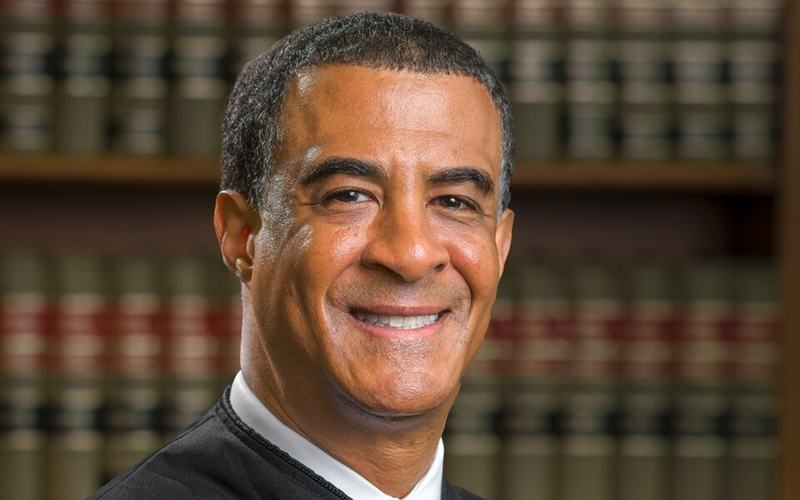
A federal judge in California blocked the Trump administration Wednesday from enforcing a $100,000 fee on new H-1B visas, ruling that federal agencies did not follow required administrative procedures before putting the charge into effect.
U.S. District Judge Haywood Gilliam in Oakland issued the order after a coalition of unions, employers and nonprofit organizations sued to challenge the fee. Gilliam, who was appointed by former President Barack Obama, said U.S. Citizenship and Immigration Services and the State Department failed to comply with required rulemaking procedures when implementing the charge.
The ruling prevents the agencies from enforcing the fee while the lawsuit proceeds. The decision follows a separate ruling in June by a federal judge in Boston that also temporarily blocked the fee in a case brought by 20 states. A federal appeals court in Boston declined in July to suspend that decision.
President Donald Trump originally imposed the $100,000 charge on new H-1B applications as part of his administration's broader effort to overhaul the skilled-worker visa program. The fee was initially scheduled to expire Sept. 21, but Trump extended it for another year.
The administration has argued that the H-1B system has been abused by companies seeking to hire foreign workers at lower costs instead of American employees. Trump invoked federal immigration authorities that allow the president to restrict the entry of foreign nationals when their admission is deemed detrimental to U.S. interests.
The H-1B program allows American employers to hire foreign workers in specialized fields, including technology, engineering and other professions requiring specialized education or training. The program generally provides 65,000 visas annually, with another 20,000 available to foreign workers who hold advanced degrees from U.S. institutions.
Before Trump's increase, H-1B applicants and employers typically faced thousands of dollars in government fees, depending on the circumstances of the application. The new $100,000 charge represented a major increase over those existing costs.
The administration has also pursued other changes to the program, including enhanced vetting of applicants and a proposed selection system that would give greater consideration to workers with higher salaries and advanced skills.
The White House did not immediately comment on Wednesday's ruling. Democracy Forward, a legal organization representing the plaintiffs, welcomed the decision and said the fee had created uncertainty for employers and workers.
The U.S. Chamber of Commerce has separately challenged the fee in federal court after a judge rejected its claims that Trump lacked authority to impose the charge. The Chamber is appealing that decision.
The legal disputes over the $100,000 charge focus in part on whether the president could impose such a substantial fee through executive action without going through the federal rulemaking process. Meanwhile, the Department of Homeland Security has separately moved toward adopting a permanent H-1B fee of roughly $103,000, a proposal that would present different legal questions if finalized and challenged in court.

Comments
No comments yet. Be the first to share your thoughts.