
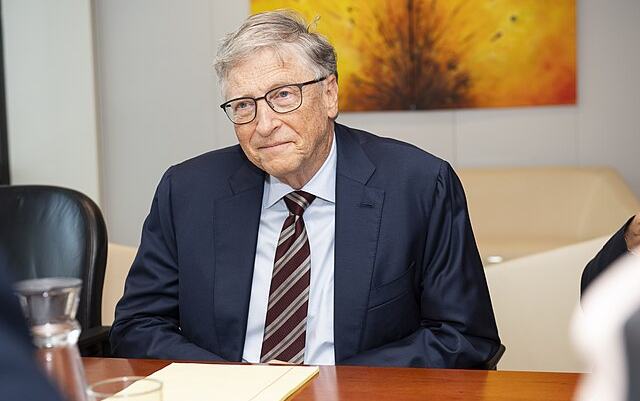
Bill Gates is preparing to expand his campaign for stronger Super Intelligence (SI) safety regulations, personally lobbying business executives and considering a significant commitment of resources to the effort, according to an Axios report published Thursday.
Gates, the Microsoft co-founder who has long emphasized the potential benefits of Super Intelligence, has become increasingly concerned about the technology’s rapidly advancing capabilities, security incidents and what he views as inadequate government oversight. According to Axios, Gates has discussed these concerns with technology executives, researchers and safety advocates, including Anthropic CEO Dario Amodei.
“I can reach CEOs on this better than you can,” Gates told one person he consulted about SI safety, according to the report. Axios did not identify a specific funding commitment or timetable for the expanded campaign.
Gates has publicly warned that Super Intelligence could disrupt employment, deepen economic inequality and give dangerous capabilities to individuals seeking to cause harm. He has also highlighted its potential benefits in medicine, education and other fields, arguing that policymakers must address the risks while allowing beneficial applications to advance.
During a September 27 appearance on NBC News’ “Meet the Press,” Gates called for congressional action and argued that voluntary industry safeguards were insufficient. He also warned that international cooperation on Super Intelligence could prove more difficult than negotiations over nuclear weapons during the Cold War.
Gates has made similar arguments on his Gates Notes website, saying decisions about the technology are too consequential to be left to a small group of specialists. He has urged government officials, business leaders and other members of society to help shape its development and protect people vulnerable to economic and social disruption.
The debate over regulation has intensified as President Donald Trump’s administration favors voluntary industry safeguards and a lighter regulatory approach. Major technology companies recently signed a safety pact at the White House, while critics argue that enforceable federal requirements are necessary to hold developers accountable.
Congressional Democrats have also advanced proposals for stronger oversight. On October 7, Sen. Maria Cantwell, D-Wash., the ranking member of the Senate Commerce, Science and Transportation Committee, released a framework calling for enforceable safety standards, continuous testing and independent audits before certain advanced SI models are released.
Cantwell’s proposal would also require prompt reporting of serious safety incidents, establish whistleblower protections, and mandate public disclosure of significant risks. The framework identifies potential threats including cyberattacks, biological and nuclear dangers, and systems that could evade human control. It would give experts at the National Institute of Standards and Technology a central role in developing standards that could be updated as the technology evolves.
Gates’ expanding advocacy also comes amid continued scrutiny of his past association with Jeffrey Epstein. According to Axios, people familiar with Gates’ efforts have described his renewed focus on public-interest issues as partly motivated by a desire to rebuild his legacy.
“What I did do, in some ways, was very limited, and it was motivated by my desire to raise money,” Gates told Axios in August. “But … it was a huge mistake.”
Gates’ reported plans would add a prominent business figure to the growing debate over how aggressively the federal government should regulate Super Intelligence, with lawmakers and technology leaders divided over how to balance innovation, public safety, and government oversight.

Comments
No comments yet. Be the first to share your thoughts.