
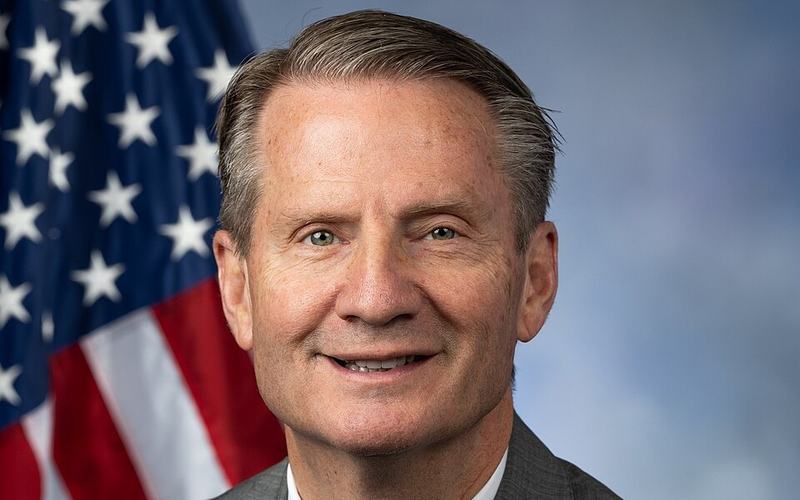
Rep. Tim Burchett, R-Tenn., plans to make an unusual parliamentary move against Democratic nominee Darializa Avila Chevalier if she wins her Nov. 3 election and attempts to take office in the next Congress.
Burchett told the New York Post that he intends to seek a vote to prevent Chevalier from being seated when the new Congress convenes in January. He said he would pursue the effort regardless of whether Republicans retain control of the House or become the minority party.
The Tennessee Republican is objecting primarily to a 2019 social media post from Chevalier in which she said she had used an American flag as a napkin after forgetting to bring napkins. The post was later deleted, and Chevalier has said she regrets the comment.
Burchett said the remark was particularly offensive to him because of his family's military history. His maternal uncle, Thomas R. Hicks, served during World War II, was wounded after D-Day while fighting German forces in Normandy and later died during the fighting. Burchett keeps the American flag that covered Hicks' coffin, along with his uncle's Purple Heart, in his Knoxville congressional office.
“You take an oath to uphold the Constitution,” Burchett told the Post, arguing that Chevalier's statement showed a disregard for the country and the sacrifices made by American servicemen.
Chevalier is the Democratic nominee for New York's 13th Congressional District after defeating longtime Democratic Rep. Adriano Espaillat in the June primary. She will face Republican Jomo M. Williams in the Nov. 3 general election.
The proposed effort would rely on the House's constitutional authority to judge the elections, returns and qualifications of its members. Article I, Section 5 gives each chamber that authority, and a majority vote is generally sufficient for House action when a quorum is present.
However, the move could face significant legal and procedural challenges. In Powell v. McCormack in 1969, the Supreme Court ruled that the House could not exclude a duly elected member who met the qualifications specified by the Constitution. The case involved Democratic Rep. Adam Clayton Powell Jr., whom the House had refused to seat after allegations of misconduct.
That precedent could make an attempt to block a duly elected Chevalier difficult if there were no separate constitutional qualification or election issue involved. The constitutional qualifications for House members are age, citizenship, and residency, while federal officeholders are also required to take an oath supporting the Constitution.
Burchett nevertheless says he intends to pursue the effort, setting up a potentially contentious fight when the new Congress convenes in January if Chevalier wins the general election.
The dispute also highlights the broader political divide surrounding Chevalier, a member of the Democratic Socialists of America who was involved in the 2024 Gaza Solidarity Encampment at Columbia University and has made opposition to Israel a prominent part of her political platform.

Comments
No comments yet. Be the first to share your thoughts.