
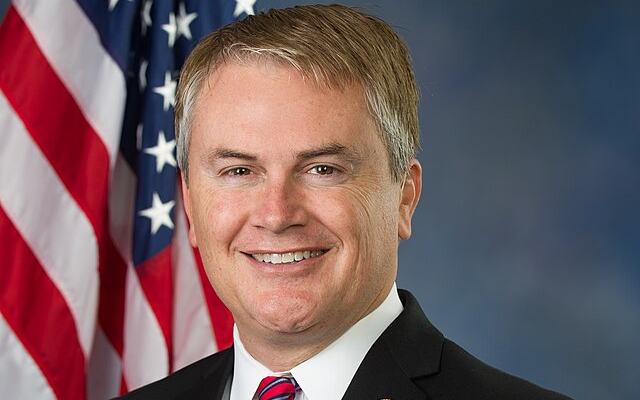
Rep. James Comer, R-Ky., is facing a potentially difficult political balancing act as he campaigns for Kentucky governor after publicly questioning several major policies of President Donald Trump. In a new interview, Comer criticized the administration's tariffs, its strategy in Iran, and its handling of immigration enforcement in Minnesota.
Comer questioned the impact of Trump's trade policies on American agriculture, arguing that the industry had been particularly vulnerable to the administration's approach despite its importance to the U.S. economy.
"The president's tried to focus on ‘America First’ and tried to get manufacturing back to the United States, but agriculture was the one industry in America where we had a trade surplus," Comer said.
The congressman also expressed frustration with the administration's approach to the war in Iran, saying the public has not been given a clear explanation of what comes next.
"We have no idea what the strategy is moving forward in Iran," he said.
Comer also suggested Trump consider withdrawing some Immigration and Customs Enforcement (ICE) agents from Minnesota amid tensions surrounding federal immigration operations.
"I just know that the situation's bad there," Comer said.
The remarks could complicate Comer's efforts to win over Republican primary voters, particularly those who strongly support Trump's agenda. Trump carried Kentucky by more than 30 percentage points in the 2024 presidential election, making his support and the views of his political base significant factors in the state's Republican politics.
Comer has long been an ally of Trump and has received endorsements from prominent Kentucky Republicans, including Sen. Rand Paul and Sen.-elect Andy Barr, for his gubernatorial campaign. However, his latest comments put him at odds with the president on several issues that remain important to the Republican base.
Comer formally announced his campaign Monday as he seeks to succeed term-limited Democratic Gov. Andy Beshear in the 2027 election. He previously ran for governor in 2015, narrowly losing the Republican primary to Matt Bevin.

Comments
No comments yet. Be the first to share your thoughts.