
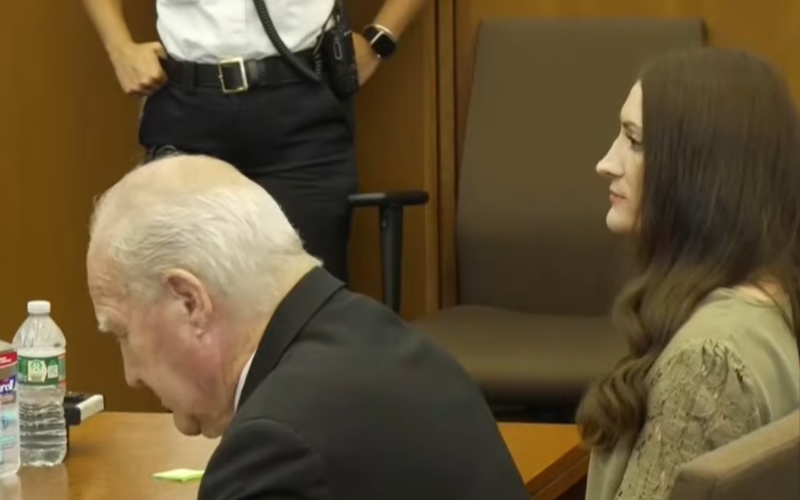
Lindsay Clancy's defense attorney argued Tuesday that prosecutors did not present enough evidence to prove she killed her three children, marking a significant change in the defense's position after her first trial ended with a deadlocked jury.
Attorney Kevin Reddington made the argument during Clancy's first court hearing since the Sept. 4 mistrial. He asked Judge William Sullivan, who presided over the original trial, to acquit Clancy, saying the case was based on speculation and that there was insufficient evidence "that this woman killed those children."
The defense had taken a different approach during the original trial. Reddington did not dispute that Clancy was responsible for the children's deaths. Instead, the defense argued that the former labor and delivery nurse was not criminally responsible because she was suffering from a severe mental illness known as postpartum psychosis.
The first trial focused heavily on Clancy's mental state and whether she understood the nature and wrongfulness of her actions. Jurors ultimately deadlocked, with 11 jurors reportedly favoring acquittal and one holding out for a murder conviction.
Reddington now points to evidence surrounding Clancy's condition when she was found severely injured outside the family's Massachusetts home and her lack of memory of the events after she regained consciousness in a hospital. He also questioned the absence of what he described as an admission that she killed the children.
Prosecutors strongly rejected the defense's revised argument. Assistant District Attorney Shanan Buckingham called it "laughable" and pointed to the extensive evidence presented during the trial.
Jurors previously heard testimony that Clancy said she heard voices directing her to kill her children. Investigators also found her DNA on exercise bands used to strangle the children. Before the trial, Reddington had filed a motion stating that Clancy was willing to stipulate in writing to her involvement in their deaths.
"For the first time, the defendant is arguing that there is no evidence she did this," Buckingham told the judge. "I'd suggest to you the entire record is voluminous as to information supporting the fact that she did this."
Prosecutors have maintained that Clancy knew her actions were wrong when she killed 5-year-old Cora, 3-year-old Dawson and 8-month-old Callan in 2023. They also argued that she deliberately sent her husband out of the house that evening to pick up medication for one of the children and dinner for the family.
The judge did not immediately rule on the defense's request, and no date has been set for another trial. Plymouth County District Attorney Timothy Cruz said prosecutors have not decided whether to retry Clancy on first-degree murder charges, pursue lesser charges such as second-degree murder or manslaughter, or dismiss the case.
Clancy's attorneys have also asked the judge to dismiss the case over issues surrounding the jury. They have argued that the lone juror favoring conviction should have been removed after the jury foreperson complained that he was unwilling to follow the law concerning reasonable doubt.
That juror, Michael Desronvil, has defended his position through his attorney and said in a video statement that public attention should be focused on Clancy's three children rather than on the jury dispute.
Clancy remains charged with murder and is expected to remain in a psychiatric hospital while the case is resolved. If prosecutors pursue another trial and obtain a murder conviction, she could face life in prison; an acquittal could instead lead to continued confinement in a mental health facility.

Comments
No comments yet. Be the first to share your thoughts.