
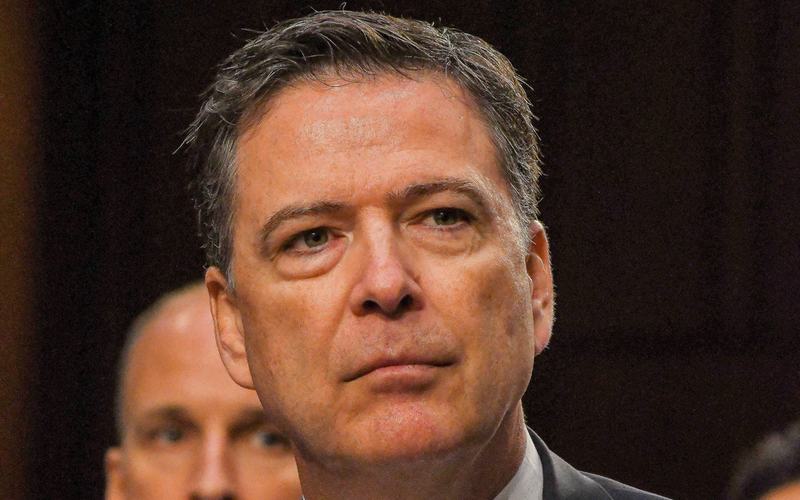
Former FBI Director James Comey’s federal case over a social media post featuring seashells arranged to read “86 47” has been pushed into 2027 as a federal judge considers defense motions seeking to dismiss the charges.
U.S. District Judge Louise Flanagan on Friday granted Comey’s request to delay his arraignment, originally scheduled for Sept. 30, until January and declined to set a new trial date while she reviews the pending motions. The government did not oppose the delay, though prosecutors said they were prepared to proceed under the original schedule.
“The gravity of the charges, pending motions, and the need to provide defense counsel additional time to prepare for trial promote need for continuance,” Flanagan wrote.
The case centers on a May 2025 Instagram post in which Comey shared a photograph of seashells arranged in the sand to form the numbers “86 47,” with the caption “Cool shell formation on my beach walk.” The Justice Department alleges the post constituted a threat against President Donald Trump, the 47th president, arguing that “86” can be understood as a call to get rid of someone. A federal grand jury indicted Comey in April on two counts: threatening the president and transmitting a threat in interstate commerce. The charges carry a maximum potential sentence of 10 years.
Comey’s defense argues the post was political expression protected by the First Amendment and did not amount to a legally prosecutable “true threat.” Attorneys contend that “86” generally means to eject or get rid of someone and that “86 47” was commonly used as a political slogan opposing Trump. They say a reasonable observer would view the post as hyperbole rather than a serious expression of intent to harm the president. The defense has also accused the Justice Department of selective and vindictive prosecution, claiming Comey was targeted because of his long-standing conflicts with Trump. Prosecutors reject that characterization and maintain there is “no serious dispute” that the post could be understood as a threat.
Comey’s lawyers have filed multiple motions challenging the indictment and seeking additional information about the investigation and grand jury proceedings. They have also raised questions about surveillance and evidence-gathering that could require further hearings.
The delay comes as Comey continues to fight a separate federal prosecution brought during Trump’s second administration over allegations that he lied to Congress about his handling of information related to the Russia investigation. That case was dismissed after a judge ruled the prosecutor who obtained the indictment had not been lawfully appointed; the Justice Department has appealed.
Comey has remained a prominent political target of Trump since the president fired him as FBI director in 2017 amid the bureau’s investigation into Russian interference in the 2016 election

Comments
No comments yet. Be the first to share your thoughts.