
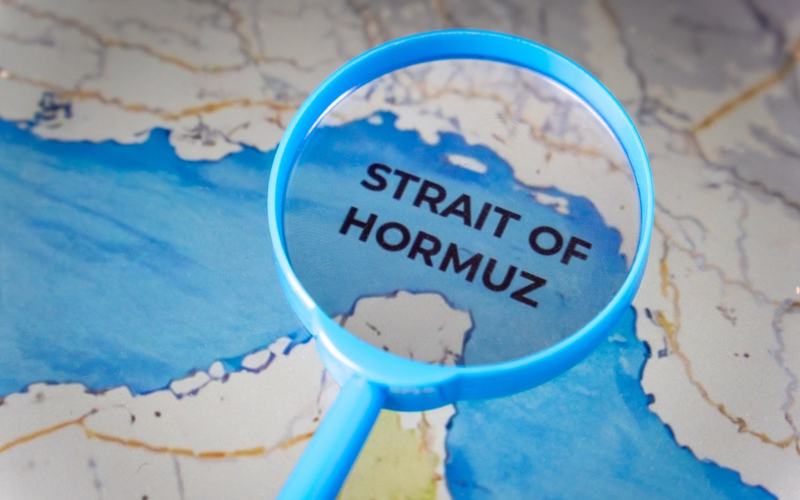
Secretary of State Marco Rubio left a two-day meeting of Group of Seven (G7) foreign ministers in Paris, France, without securing commitments from America's closest allies to help defend commercial shipping against Iranian attacks in the Strait of Hormuz.
Rubio said Tuesday that he raised the possibility of a joint international effort to protect vessels traveling through the strategic waterway, but received no response from his counterparts when he appealed.
"I raised it. I didn't get a response," Rubio told reporters when asked about the reaction from other G7 representatives.
The secretary of state maintained that the United States would continue protecting international shipping and urged other countries to contribute military resources to the effort. He argued that securing the passage should be a shared international priority because disruptions affect nations around the world, particularly those dependent on energy shipments through the region.
"We've actually encouraged our partners to join us in the effort of defending global shipping," Rubio said.
Several American allies, including France, have indicated they would be unwilling to send minesweepers and other military assets into the area until active fighting ends and the threat to their personnel decreases. Rubio criticized the dilemma, arguing that waiting until the danger disappears would make it more difficult to protect vessels while attacks are occurring.
He described the disagreement as a "kind of a catch-22" and said some countries were considering greater involvement, although no commitments had been secured.
"We think it's in the interest of the world to protect shipping because the U.S. doesn't get any oil from there," Rubio said. "These countries should step up."
The Paris meetings also addressed the war in Ukraine as Washington continues diplomatic efforts to negotiate an end to the conflict. Ukrainian Foreign Minister Andrii Sybiha met with Rubio before participating in discussions with the broader G7 delegation.
According to the State Department, the two officials discussed negotiations to end the Russia-Ukraine war, energy resilience and defense cooperation. Their meeting occurred as separate three-way negotiations involving American, Russian and Ukrainian representatives were taking place in the United Arab Emirates.
G7 diplomats also discussed security assistance for Ukraine, an issue that has created concerns among European governments following the Trump administration's reduction of certain forms of American support. France, Germany, Italy and the United Kingdom are among the European G7 members participating in discussions over the country's defense needs.

Comments
No comments yet. Be the first to share your thoughts.