
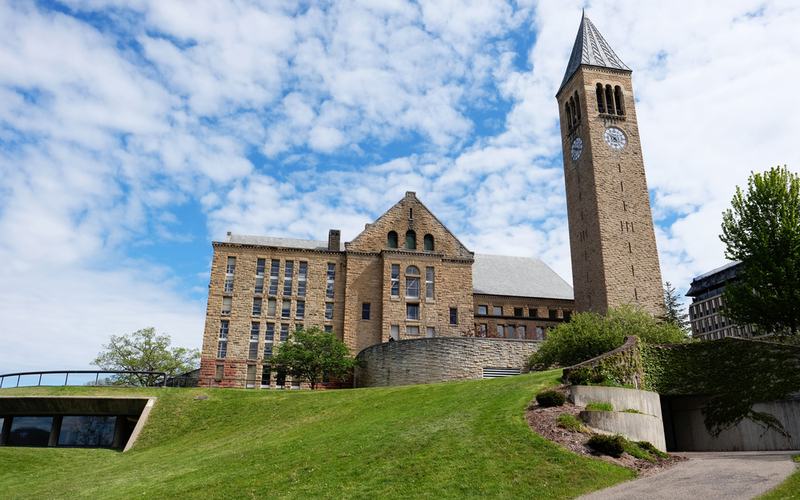
Cornell University’s main administration building was vandalized overnight as student groups prepared to protest the school’s handling of an alleged 2024 fraternity-house sexual assault that has sparked growing outrage on campus.
Glass in one of the building’s doors was damaged, while red-painted graffiti appeared on nearby walls with messages criticizing patriarchy and Cornell’s handling of sexual assault complaints. University officials said they were investigating the damage.
“Damaging property is not the answer” to the “frustration and strong emotions” surrounding the case, Cornell spokesman Kyle Kimball said.
The vandalism came as student organizations prepared for a Monday afternoon “Justice for Survivors” demonstration calling for changes to Cornell’s sexual assault procedures and additional disciplinary action stemming from an October 2024 party at the Chi Phi fraternity.
A woman identified in court documents as Jane Doe alleges that she was sexually assaulted by multiple men after being pressured to consume alcohol and drugs. She recently sued Cornell, seven former students, the fraternity and others, alleging she became incapacitated before multiple men sexually assaulted her.
Attorneys for two of the former students have denied that their clients participated in a sexual assault. Some of the accused students told Cornell investigators that the sexual activity was consensual. No criminal charges have been filed.
The case has drawn national attention to Cornell’s response after Doe reported the alleged assault to campus police in November 2024. Cornell has said the fraternity chapter was shut down and that some students were expelled while others were suspended, rejecting claims that the university imposed minimal consequences.
New York Gov. Kathy Hochul has criticized the handling of the case, saying Doe was “failed by people and institutions,” including Cornell police and local District Attorney Matthew Van Houten. Hochul recently directed the state attorney general to take over the criminal investigation after Van Houten reopened it and called for an independent review of Cornell’s actions.
Cornell President Michael Kotlikoff apologized in a video Saturday and acknowledged that Doe’s allegations raised “heartbreaking and troubling issues” involving sexual assault, alcohol and drug use, and party culture. Kotlikoff reaffirmed his support for an independent review and pledged greater transparency as the university faces continued demands for accountability.

Comments
No comments yet. Be the first to share your thoughts.