
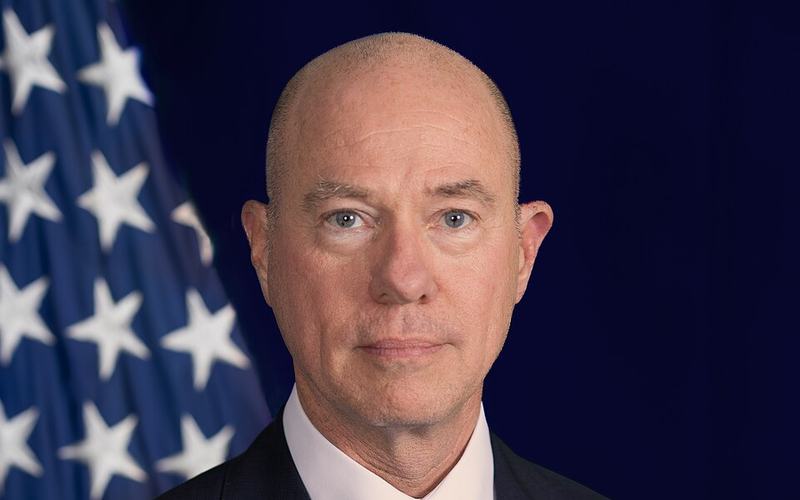
Federal Aviation Administration Administrator Bryan Bedford is scheduled to testify Tuesday, November 10, before the House Transportation and Infrastructure Committee about the ongoing effort to modernize the nation’s air traffic control system. The hearing comes as the Trump administration seeks an additional $30 billion from Congress to expand the project beyond the $12.5 billion lawmakers previously approved.
Congress provided the initial $12.5 billion investment in legislation signed by President Donald Trump in July 2025. The funding launched an accelerated modernization initiative intended to replace outdated equipment and technology that air traffic controllers still rely on to manage flights across the country.
The existing system includes decades-old computers, aging telecommunications networks, outdated radar equipment, and facilities that continue to depend on paper flight strips and floppy disks. The FAA has warned that the infrastructure is increasingly inadequate for the demands of modern air travel, contributing to delays and cancellations when equipment fails.
Bedford has reported substantial progress since the modernization effort began. In September testimony before a House appropriations subcommittee, he said the FAA had replaced more than 64% of its copper-based telecommunications infrastructure with modern equipment, converted more than 400 radio sites, and installed surface-awareness systems at airports. The agency has also begun replacing paper flight strips with electronic displays in control towers.
However, Bedford has warned that the original $12.5 billion allocation will not cover all the work initially planned. He told lawmakers in September that completing the first phase could cost as much as $16 billion, with the administration's fiscal 2027 budget request including another $1.5 billion to help address the shortfall.
The administration is also seeking a much larger investment through the proposed $30 billion Modern Skies Act, introduced by Sen. Eric Schmitt, R-Mo., in September. The legislation would provide $10 billion for digital air traffic control systems and telecommunications, $10 billion to replace deteriorating airport infrastructure, including control towers and runways, and another $10 billion for airport improvements and a new grant program.
Transportation Secretary Sean Duffy has argued that the additional funding is necessary to complete the modernization effort and improve the flying experience for Americans. The proposal has received support from major airlines, aviation organizations and the National Air Traffic Controllers Association.
The project faces significant challenges beyond securing additional funding. A Government Accountability Office report released in September found that the FAA had not developed a comprehensive, well-documented estimate of the modernization program's full life-cycle costs. The report also raised concerns about coordination and scheduling across more than 11,000 individual projects.
Bedford pushed back against some of the findings during his September testimony, saying the FAA had developed cost estimates and an integrated master schedule. He also described the report as useful in identifying the scale of the agency's modernization challenges.
The FAA has set an ambitious goal of delivering a new air traffic control system by the end of 2028. The agency is also working to address a longstanding shortage of air traffic controllers, with Bedford reporting approximately 11,000 certified professional controllers deployed as of August 2026, compared with a staffing target of 12,563.
Tuesday's hearing will give lawmakers an opportunity to question Bedford about the project's progress, remaining obstacles, and the administration's request for additional funding. The outcome will help determine whether Congress is prepared to provide the resources the FAA says are necessary to complete the overhaul.

Comments
No comments yet. Be the first to share your thoughts.