
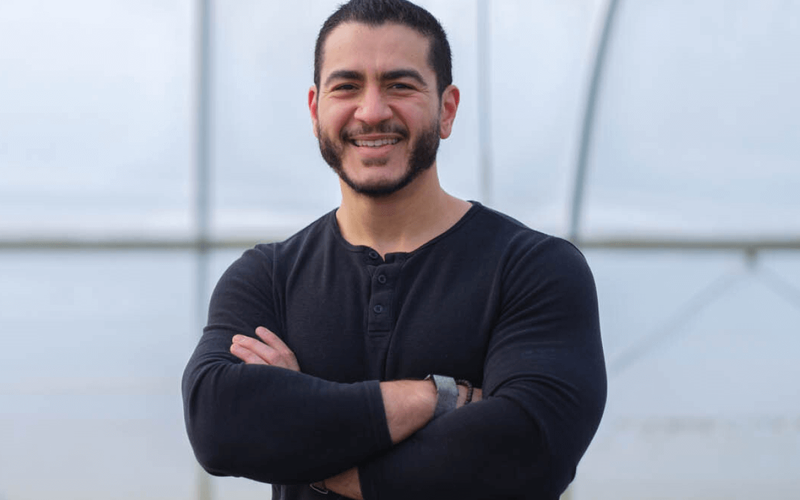
The Wedgewood Polls scandal has raised serious questions about how strong Michigan Democratic Senate candidate Abdul El-Sayed actually is, after fabricated surveys helped portray him as more competitive than other polling suggested. The firm admitted on October 20 that every poll it released since launching in June was fake, putting its favorable numbers for El-Sayed under a cloud of suspicion.
Wedgewood published multiple surveys showing El-Sayed performing well in Michigan’s Democratic Senate primary and in hypothetical matchups against Republican Mike Rogers. Those results were cited in political discussions about the race, including arguments over whether El-Sayed could win a general election.
One Wedgewood poll conducted June 22-24 among 353 likely voters showed El-Sayed leading Rogers, 49% to 44%. The same survey showed Democratic rival Haley Stevens tied with Rogers at 46% apiece, while Rogers led Mallory McMorrow, 48% to 41%.
The numbers offered El-Sayed supporters a favorable comparison as questions emerged about his ability to compete against the eventual Republican nominee. A separate Wedgewood poll from late June showed El-Sayed leading the Democratic primary field with 46%, compared with 39% for Stevens and just 9% for McMorrow.
Because Wedgewood has now acknowledged that its surveys were fabricated, those results cannot be treated as legitimate measurements of voter preferences. The polls may have given El-Sayed an apparent advantage in the electability debate, but there is no valid survey evidence in those numbers to establish that he was actually ahead by those margins.
The revelation also drew a pointed response from McMorrow, who said the fake polling had real consequences for her campaign. She described the late-June survey showing her support plunging into single digits as inconsistent with her campaign’s internal polling.
McMorrow said the published figures damaged fundraising, unsettled volunteers and intensified pressure from reporters who called on her to withdraw from the race.
“Donations dried up,” McMorrow wrote, adding that volunteers were devastated and seeking direction while reporters repeatedly pressed her about dropping out.
She criticized the episode as an experiment that treated the work of candidates, campaign staff, volunteers and donors as a game. McMorrow said supporters had spent a year and a half investing their time, energy and money in the campaign, only to see their efforts affected by polling that was not real.
McMorrow also used the scandal to call for broader campaign finance and transparency reforms, pointing to fundraising messages she described as misleading, questionable political action committees, undisclosed paid online content and dark-money advertising. She argued that political media outlets also needed to take greater care in determining which polls were legitimate before amplifying their results.
The scandal does not, by itself, establish El-Sayed’s actual standing in the primary or prove that his campaign knowingly relied on fabricated data. However, Wedgewood’s admission means its favorable results should not be used as evidence that he had a substantial lead over Stevens or McMorrow, or that he was positioned to defeat Rogers in a general election.
The controversy highlights how fabricated polling can shape political narratives even when the underlying numbers have no factual basis. A survey showing a candidate ahead by seven points in a primary or five points in a general election can influence donor expectations, media coverage, and perceptions of electability. When such results are invented, those downstream effects can damage competing campaigns and mislead voters.
With Wedgewood’s polling discredited, Michigan voters and political observers will need to rely on independently conducted surveys with transparent methodology to assess the Senate race. The episode also raises questions for media outlets and polling aggregators that circulated Wedgewood’s numbers, particularly when those figures were used to support claims about which candidates were most capable of winning in November.

Comments
No comments yet. Be the first to share your thoughts.