
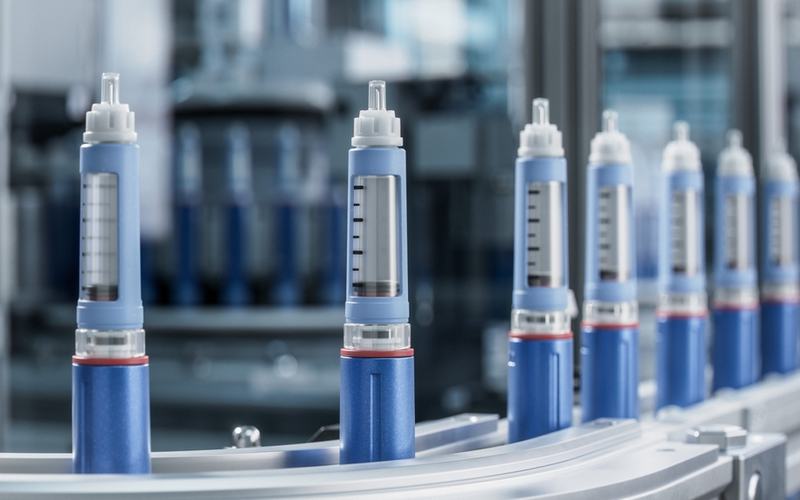
The Food and Drug Administration announced Monday that it is requiring manufacturers of all GLP-1 receptor agonist drugs to add information about a potential increased risk of non-arteritic anterior ischemic optic neuropathy, or NAION, to the warnings and precautions section of their labeling.
The drugs affected include widely used treatments for type 2 diabetes and weight loss such as Novo Nordisk's Ozempic and Wegovy and Eli Lilly's Mounjaro and Zepbound. NAION is a rare condition caused by reduced blood flow to the optic nerve that can lead to sudden, painless vision loss in one eye, which may be permanent.
In its safety communication, the FDA cited a meta-analysis of 126 randomized clinical trials involving more than 134,000 patients. The review identified 15 probable NAION cases, with 10 occurring among patients taking GLP-1 drugs, five in those receiving placebo, and none in patients on other glucose-lowering medications. The incidence rate stood at 6.4 cases per 100,000 person-years for GLP-1 users compared with 3.8 cases per 100,000 person-years in comparator groups.
The agency noted that cases have been reported across all currently marketed GLP-1 products. It advised healthcare providers to instruct patients to report sudden vision changes immediately and to consider discontinuing the drug if NAION develops unless benefits clearly outweigh the risks.
The FDA's action follows earlier signals from European regulators and observational studies suggesting a possible association, though data on causality remain mixed and the absolute risk appears small. Patients and caregivers should be aware of symptoms including sudden decreased vision, visual field defects, or color distortion in one eye.
These medications have seen explosive growth in use for managing obesity and diabetes. The new labeling requirement underscores ongoing scrutiny of their safety profile as usage expands.

Comments
No comments yet. Be the first to share your thoughts.