
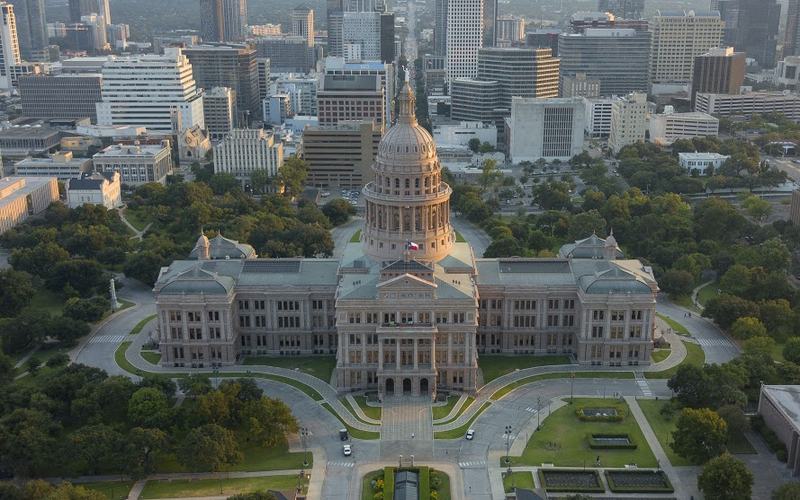
The Democratic sweep of Texas statewide offices and the state House has ended decades of Republican control in Austin’s state government, removing a primary external check on progressive policies pursued by the state’s blue cities. Local leaders in places like Austin, who often clashed with the prior administration over crime, spending, and social policy, now operate with aligned state partners rather than adversaries. For the capital city, that shift carries concrete implications across criminal justice, public safety, education, homelessness, and taxes.
Travis County District Attorney José Garza, first elected in 2020 on a progressive platform, has drawn repeated scrutiny for his office’s handling of cases. In 2024, prosecutors missed the state’s 90-day deadline to secure indictments for jailed defendants 263 times, according to analyses of court records. Those lapses resulted in releases on reduced or personal-recognizance bonds for defendants facing a range of charges, including violent and sexual offenses in some instances. Some defendants were subsequently taken into federal immigration custody and deported without local prosecution. Garza’s office has expanded pretrial diversion programs and prioritized cases involving law enforcement officers; it has presented dozens of such cases to grand juries, though convictions in use-of-force matters have been limited.
Outgoing Gov. Greg Abbott had proposed creating a statewide prosecutor’s office with authority to monitor local cases and intervene when indictments were not obtained within the statutory window, explicitly citing Travis County as a target. The plan would have given the appointee additional time to act and authority to take over certain prosecutions. With a Democratic governor and attorney general now in place, that mechanism is not expected to advance, leaving local prosecutorial discretion less constrained by state-level enforcement tools.
Austin’s police budget has also been a flashpoint. In 2020, the City Council voted to reallocate roughly $150 million (about one-third of the Austin Police Department’s budget) toward social services, mental health response, and a “Reimagine Safety” fund. Some functions were moved out of the department, and certain units faced reductions or further review. The city has continued to report hundreds of officer vacancies in subsequent years. State laws passed under Republican majorities limited further cuts to police funding and imposed property-tax revenue caps that constrain local budgets. Those constraints are now subject to revision or non-enforcement under Democratic statewide leadership.
On education, the prior Republican administration enacted a $1 billion school choice program providing education savings accounts of roughly $10,000 per participating student for private or alternative schooling, along with curriculum adjustments emphasizing Texas and U.S. history and certain religious texts. Gov.-elect Gina Hinojosa has pledged to reverse the voucher program, which she has described as draining resources from public schools, and to replace Texas Education Agency leadership while ending state takeovers of underperforming local districts. The new Democratic comptroller has signaled plans to audit the program. These changes would remove or substantially alter state-level reforms that applied statewide, including in the Austin Independent School District.
Homelessness policy offers another example. Austin lifted its public camping ban in 2019; voters later reinstated restrictions via Proposition B in 2021, and the state enacted its own ban. Abbott directed state resources, including Department of Public Safety personnel, to clear encampments in and around the capital, removing sites and debris. City programs have continued sweeps, yet reports indicate only a minority of cleared locations remain free of return activity. With state leadership no longer prioritizing such enforcement, local approaches favoring perpetual lenience over camp clearance face fewer external interventions.
Property taxes in Austin have risen substantially in recent years: the city’s rate is up roughly 31 percent since 2017 amid growing general-fund spending. State law currently limits revenue growth from property taxes without voter approval. A Democratic statewide government could revisit or loosen those caps, alter tax-relief measures previously advanced by Republicans, or shift priorities in ways that expand local revenue flexibility. Austin’s City Council has repeatedly sought higher rates for social programs and services; the absence of a Republican governor and aligned legislative majorities reduces the likelihood of state preemption or funding conditions tied to compliance.
These areas illustrate a structural change: policies previously moderated or overridden by state Republican majorities can now proceed with greater local and statewide Democratic alignment. Outcomes will depend on how new state officials exercise their authority and on local implementation, but the prior balance of competing institutions has been removed.

Comments
No comments yet. Be the first to share your thoughts.