
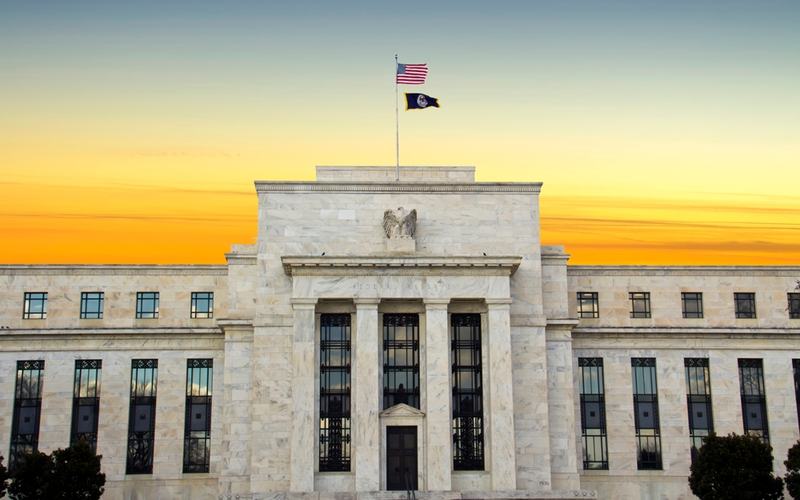
The Federal Reserve is expected to hold interest rates steady at its meeting next week, according to analysts, despite inflation remaining above the central bank’s 2% target and financial markets anticipating at least one rate hike before the end of the year.
The Federal Open Market Committee (FOMC), which sets the federal funds rate, will meet over two days and announce its decision at 2 p.m. Wednesday. At its September meeting, the committee raised its benchmark rate for the first time in three years, bringing the target range to 3.75% to 4%.
The decision comes days before the Nov. 3 midterm elections, in which Democrats are seeking to gain control of both chambers of Congress from Republicans aligned with President Donald Trump.
Trump has repeatedly criticized the Federal Reserve for keeping interest rates too high, previously targeting former Chairman Jerome Powell. He has so far refrained from directing similar public criticism at Kevin Warsh, whom he appointed to replace Powell.
Inflation remains a central concern for policymakers. The Fed’s preferred measure, the Personal Consumption Expenditures price index, peaked at 7.2% in 2022 before falling to approximately 2.2% by late 2024 following a series of interest-rate increases. Inflation subsequently accelerated, reaching a three-year high of 3.9% in May.
Higher energy costs have added to the pressure. Following U.S. and Israeli attacks on Iran in late February, Iranian retaliation sharply disrupted oil and gas supplies through the Gulf, sending global energy prices higher. Those increases have begun affecting the prices of other goods and services, making inflation a major concern for voters ahead of the election.
Loretta Mester, the former president of the Federal Reserve Bank of Cleveland, told Agence France-Presse that the upcoming election should not influence the central bank’s decision.
“The Fed doesn't take into account any kind of political issues in that FOMC room,” Mester said, arguing that monetary policy decisions are based on economic conditions.
Mester said a stable labor market combined with inflation above the Fed’s target supports further interest-rate increases. However, she suggested policymakers could leave rates unchanged next week and wait until their meeting in early December before tightening monetary policy further.
Wendy Edelberg, a senior fellow at the Brookings Institution, said the Fed would likely prefer to avoid becoming embroiled in political disputes immediately before the election. She argued that delaying a potential rate increase until December would have limited economic consequences while reducing the risk of the central bank becoming a target of political criticism.
Such a delay would not necessarily signal an effort to accommodate Trump, who has pressed for lower interest rates to stimulate economic activity, Edelberg said.
The Fed’s policy decision also comes amid an ongoing dispute over its independence. Since returning to office, Trump has pursued a criminal investigation involving Powell and attempted to remove Federal Reserve Governor Lisa Cook. The investigation involving Powell was dropped as Warsh’s Senate confirmation advanced, while the effort to remove Cook has continued despite a Supreme Court decision blocking an earlier attempt.
Cook declined last week to attend a White House hearing related to allegations of mortgage fraud, which she denies.

Comments
No comments yet. Be the first to share your thoughts.