
Five members of the U.S. House are expected to identify as religiously unaffiliated when the next Congress begins in January, up from just one two years ago. The group includes three returning lawmakers and two newly elected Democrats, highlighting a growing presence of secular and nonreligious voices in American politics.
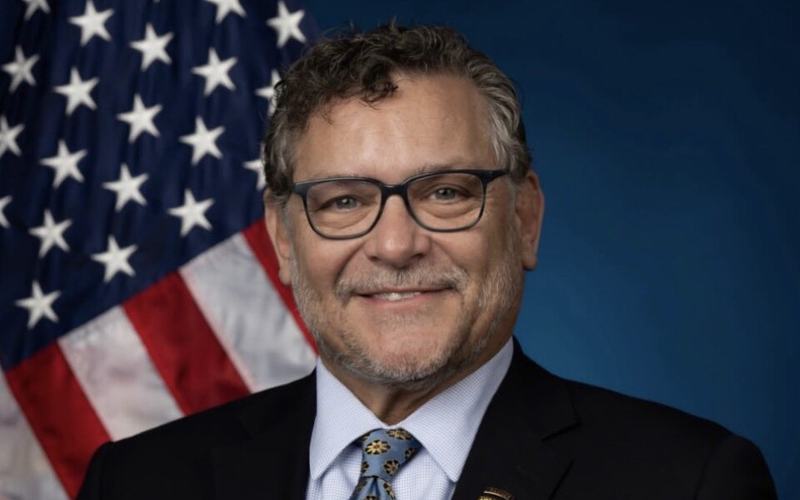
The incoming members are Reps. Yassamin Ansari and Abraham Hamadeh of Arizona and Emily Randall of Washington, all of whom won reelection, along with Pennsylvania Democrat Chris Rabb and Missouri Democrat Fred Wellman. Rabb won the seat previously held by Dwight Evans, while Wellman defeated Republican Rep. Ann Wagner by approximately five percentage points in Missouri's 2nd Congressional District.
Rabb publicly thanked atheist supporters following his May primary victory. Wellman, a retired Army officer, campaigned on affordability, corruption, and government accountability. Their victories add to the number of openly nonreligious lawmakers serving in elected office.
The trend extends beyond Washington. More than 100 openly nonreligious lawmakers are expected to serve in state legislatures across 38 states, compared with 81 lawmakers in 33 states previously, according to the Center for Freethought Equality. Georgia, Idaho, Illinois, Ohio and West Virginia are also expected to elect their first openly atheist, agnostic or humanist legislators.
Texas Democrat Jon Rosenthal, who identifies as agnostic and multireligious, also won a statewide race for the Texas Railroad Commission.
The growing political presence of religiously unaffiliated Americans reflects a broader change in the country's religious makeup. Preliminary Fox News exit polling found that unaffiliated voters accounted for 27% of the 2026 midterm electorate, compared with 23% in the 2024 election.
That voting bloc has leaned heavily Democratic in recent elections. An October Pew Research Center survey found that 81% of atheist voters and 75% of agnostic voters supported Democratic House candidates. Among voters who described their religion as “nothing in particular,” 48% backed Democrats.
Robert P. Jones of the Public Religion Research Institute said the growing number of religiously unaffiliated Americans should not necessarily be interpreted as widespread hostility toward religion. Some have left organized religious institutions over disagreements with church teachings, including positions on gay and lesbian relationships, while others object more directly to the influence of white Christian nationalism in American politics.
The Congressional Freethought Caucus, which includes 37 religious and nonreligious lawmakers, advocates for the separation of church and state and policies it describes as grounded in science and reason. Its membership illustrates how secular advocacy has gained a more organized presence within Congress.
The developments come as churches and religious institutions continue to face challenges in retaining members, while the growing number of Americans without a formal religious affiliation increasingly influences elections and public policy debates.

Comments
No comments yet. Be the first to share your thoughts.