
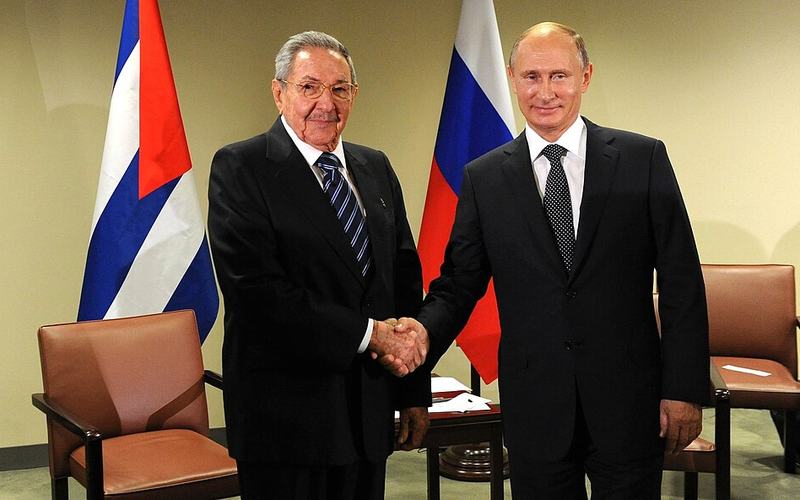
Former Cuban President Raúl Castro is facing a new criminal charge in Florida over the 1996 downing of two civilian aircraft operated by the Miami-based exile group Brothers to the Rescue. Florida Attorney General James Uthmeier announced Monday that Castro, 95, is accused of conspiring to commit first-degree murder in an attack that killed four people.
The state case builds on a federal indictment announced in May that charged Castro in connection with the deaths and the destruction of an aircraft. Uthmeier said the charges stem from allegations that Castro directed Cuban intelligence agents to infiltrate Brothers to the Rescue and ultimately authorized the attack on its planes.
According to the Florida complaint, Castro was serving as Cuba’s minister of the Revolutionary Armed Forces and first vice president when he gave final authorization for the shootdown. Cuban intelligence operatives associated with the Wasp Network allegedly infiltrated the exile organization in the Miami area and Florida Keys, gathering information about its flight plans.
On February 24, 1996, three unarmed Cessna aircraft departed Opa-Locka Airport in Miami-Dade County. Cuban MiG fighter jets fired air-to-air missiles at two of the planes over international waters, destroying them and killing all four people aboard, according to the complaint. U.S. officials have said the aircraft were flying away from Cuba and received no warning, despite contact with Havana air traffic control.
It remains unclear whether Castro will ever appear in a U.S. courtroom. Uthmeier acknowledged that the former Cuban leader is unlikely to travel voluntarily to Miami, but said the state intends to pursue the case. He added that an arrest warrant could restrict Castro’s ability to travel to countries with extradition agreements with the United States.
“I’m not ignorant of the fact that Raúl Castro is an older man who’s probably not looking to march himself into Miami,” Uthmeier said. “I think others would get him before the court of law would, but at the end of the day, we stand ready to prosecute the case.”
Jason Reding Quiñones, the U.S. attorney for the Southern District of Florida, said the state charges build on the federal government’s earlier action. “Our historic federal indictment laid the groundwork, and James and his team have now taken the important step of bringing charges under Florida law,” he said.
Cuban President Miguel Díaz-Canel condemned the federal indictment earlier this year, calling it a political stunt intended to justify potential U.S. military action against Cuba. He accused Washington of lying and manipulating the circumstances surrounding the 1996 incident.
Castro assumed Cuba’s presidency in 2006, succeeding his ailing older brother, Fidel Castro. He transferred the presidency to Díaz-Canel in 2018 and stepped down as head of the Cuban Communist Party in 2021. However, he is widely believed to retain influence behind the scenes, with his grandson, Raúl Guillermo Rodríguez Castro, also holding a prominent position within the Cuban leadership’s inner circle.
The charges come amid heightened tensions between Washington and Havana. President Donald Trump has threatened military action against Cuba following the U.S. capture of former Venezuelan President Nicolás Maduro, a longtime ally of the Cuban government. The Trump administration has also imposed a blockade that has severely restricted fuel shipments to the island, contributing to widespread power outages, shortages, and further economic hardship.
The Florida case now adds another legal front to the decades-long dispute over the shootdown, which remains one of the most consequential confrontations between the Cuban government and the Cuban exile community in the United States.

Comments
No comments yet. Be the first to share your thoughts.