
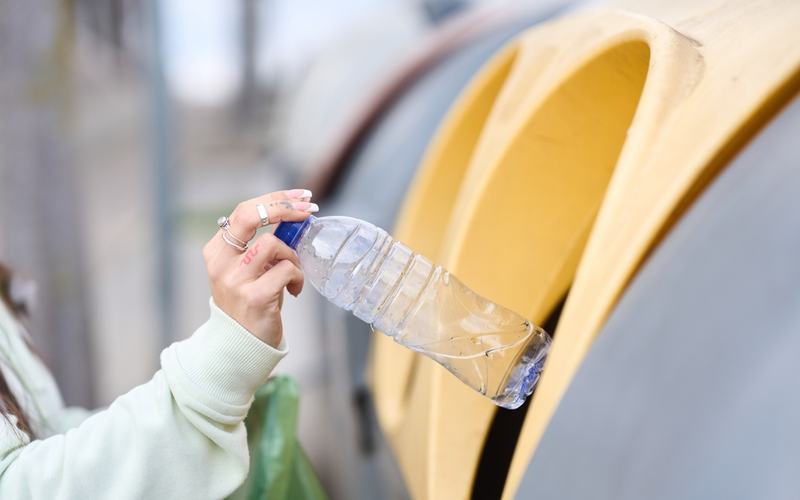
France has abandoned plans to impose a mandatory nationwide deposit system for plastic bottles, instead allowing municipalities that choose to participate to establish voluntary programs.
The French government announced Friday that “no mandatory deposit system” would be implemented after a three-month consultation involving local governments, elected officials, industry representatives and recycling organizations. The government said the new approach would respect the responsibilities of local authorities while targeting areas where bottle collection rates remain lower.
The proposal had been revived by President Emmanuel Macron in May as part of France’s effort to improve plastic recycling and meet European Union targets. Under a traditional deposit system, consumers pay a small additional amount when purchasing a drink and receive the money back when they return the empty container to a collection point.
The mandatory approach faced strong opposition from local elected officials and organizations representing municipalities. Critics argued that creating a separate collection system could disrupt existing recycling operations, increase costs and weaken waste-management programs that local governments had already invested in.
France’s Senate welcomed the government’s decision, saying the reversal addressed concerns that had been raised repeatedly by lawmakers and local authorities. The Senate’s environmental committee argued that a nationwide deposit system could impose additional costs on consumers and municipalities while diverting resources from other waste-reduction efforts.
The reversal represents a notable pullback from the government’s earlier position. In May, French officials had argued that a deposit system was necessary to help France meet European recycling requirements, with the government pointing to the country’s relatively low plastic-recycling rates. Officials had previously said the system could be introduced ahead of a 2029 European deadline.
The French government had previously described the deposit system as one of the tools available to help the country meet its European recycling obligations. In June, the government said only about 58.3% of plastic beverage bottles were collected in 2024, compared with European targets of 77% in 2025, 80% in 2026 and 90% in 2029.
The mandatory proposal also faced criticism over the potential impact on existing municipal recycling infrastructure. French local governments have already invested heavily in collection and sorting systems, and opponents argued that removing plastic bottles from those systems could weaken their finances and reduce the value of materials already being collected.
Instead, France will now pursue a more localized approach, encouraging municipalities with weaker collection rates to voluntarily adopt deposit programs while allowing areas with stronger existing systems to continue using them.
The decision comes as European countries face broader pressure to reduce plastic waste and increase recycling. France’s experience illustrates the political and economic challenges governments can face when attempting to impose nationwide environmental regulations, particularly when local governments argue that existing systems and investments could be disrupted.
The French Senate described the decision as a response to concerns raised by territorial governments and lawmakers since Macron revived the proposal in May. The Senate said the government’s decision would avoid imposing a system it characterized as costly, complex and potentially poorly suited to individual communities.
France’s environment ministry said the voluntary approach will be incorporated into the country’s broader plastic plan as officials continue working toward European recycling targets. The government said the new approach will focus on finding solutions that work on a territory-by-territory basis rather than imposing the same system on every municipality.

Comments
No comments yet. Be the first to share your thoughts.