
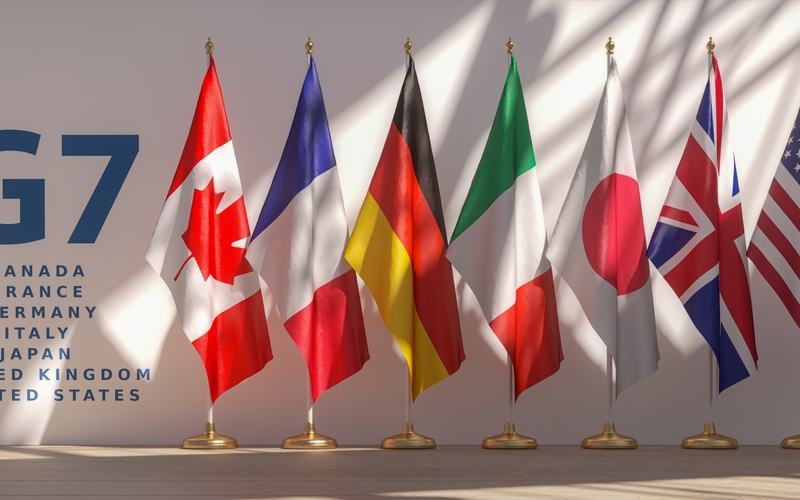
G7 foreign ministers from the United States, Britain, Canada, France, Germany, Italy, and Japan opened their two-day meeting in Paris on Monday, focusing on global security challenges including the war in Ukraine and tensions in the Middle East.
The session, originally scheduled for Marseille, moved to the French capital at the Quai d'Orsay due to logistical demands from overlapping events and strained security resources amid ongoing protests. France cited the need to manage personnel, equipment, and transportation for both the G7 talks and the Paris Peace Forum.
US Secretary of State Marco Rubio joined counterparts including France's Jean-Noël Barrot, Britain's Ed Miliband, and Italy's Antonio Tajani. The group also welcomed representatives from invited nations such as Brazil, South Korea, Egypt, Saudi Arabia, and Ukraine.
France used the platform to launch a G7-backed ports alliance aimed at disrupting international narcotics trafficking. The network connects 14 major ports with customs authorities and organizations including Interpol and the UN Office on Drugs and Crime to enhance intelligence sharing and container inspections.
Discussions addressed support for Ukraine amid upcoming US-mediated talks with Russia in Abu Dhabi. Ministers reviewed European assessments of Washington's policy direction following recent elections. The meeting also covered Middle East stability and broader efforts to maintain open sea lanes.
The event marks one of the final major gatherings under France's G7 presidency, which concludes at the end of the year before the United States assumes leadership. Officials emphasized practical cooperation on transnational threats over symbolic venues.

Comments
No comments yet. Be the first to share your thoughts.