
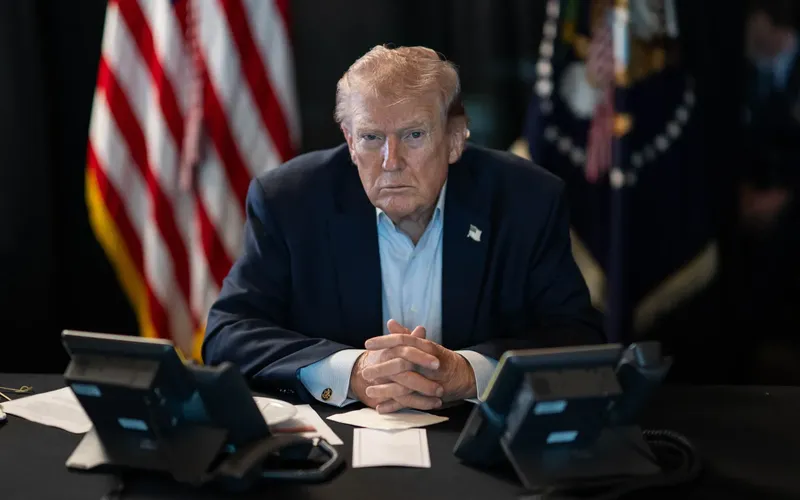
President Donald Trump is reviewing several strategies to conclude the conflict with Iran, as the administration seeks a path forward after Republican losses in the midterm elections.
The war, which began with U.S. and Israeli strikes in late February, has dragged on for eight months and contributed to voter dissatisfaction. Reports indicate Trump met with national security advisers to discuss next steps, with decisions expected soon.
Among the options under consideration are a brief but intense resumption of strikes targeting Iran's energy infrastructure, nuclear sites, and missile capabilities; a more limited military action; intensified negotiations involving Vice President JD Vance; or maintaining the current naval blockade and economic pressure on Tehran.
In a Sunday interview with CNN, Trump stated that renewed attacks were highly unlikely if talks showed progress on Iran's nuclear program and reopening the Strait of Hormuz. He repeated the assessment multiple times, noting Iran's economic struggles, including 301% inflation, and asserting that the U.S. had already struck hard enough to weaken the regime significantly.
Trump emphasized military readiness, mentioning three aircraft carriers in the region and identified targets such as 38 bridges that could be struck quickly if needed. He described Iran as a failing nation but said any decision would depend on a strong agreement.
Other reports detail internal divisions, with some advisers favoring escalation to achieve decisive results, while others push for diplomacy to avoid further costs. Iran has outlined conditions for talks, including lifting sanctions and ending the blockade.
The administration continues to monitor developments, with Trump indicating the U.S. would act if necessary but preferred a resolution that avoids broader destruction.

Comments
No comments yet. Be the first to share your thoughts.