
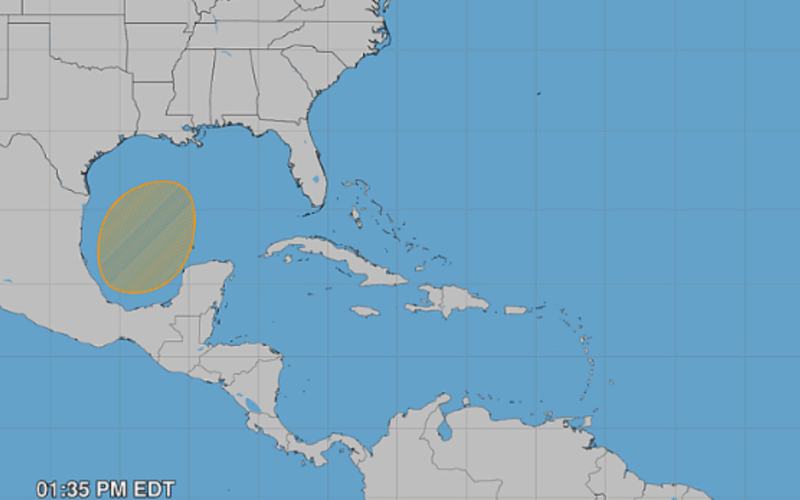
The National Hurricane Center is monitoring an area of low pressure that could form over the southwestern Gulf of America around the middle of the week and potentially develop into a tropical depression.
The system has a 40% chance of developing over the next seven days, according to the NHC's Sunday afternoon outlook. Forecasters expect the disturbance to drift northward, but environmental conditions are currently expected to be only marginally favorable for development.
The chance of formation during the next 48 hours is near zero, meaning any significant organization would likely occur later in the week.
The National Weather Service office in New Orleans cautioned that it is too early to determine whether the system will have any local effects. Officials urged residents to continue monitoring forecasts as the disturbance develops.
The potential Gulf system comes as the Atlantic hurricane season reaches an unusual milestone. Eight named tropical storms have formed in the Atlantic this year, but none has produced sustained winds of at least 74 mph, the threshold required to become a hurricane.
October 4 is now the latest date the Atlantic basin has gone without producing its first hurricane in a calendar year since satellite tracking began in the 1960s. The previous record was September 11, reached in both 2002 and 2013.
Only two complete seasons in reliable Atlantic records, 1907 and 1914, ended without a hurricane.
Forecasters have attributed the unusually limited hurricane activity in the Atlantic to a strong El Niño, which has contributed to increased upper-level wind shear and dry air across the basin's main storm-development regions. Those conditions have hindered Atlantic development while contributing to increased tropical activity in the eastern Pacific.

Comments
No comments yet. Be the first to share your thoughts.