
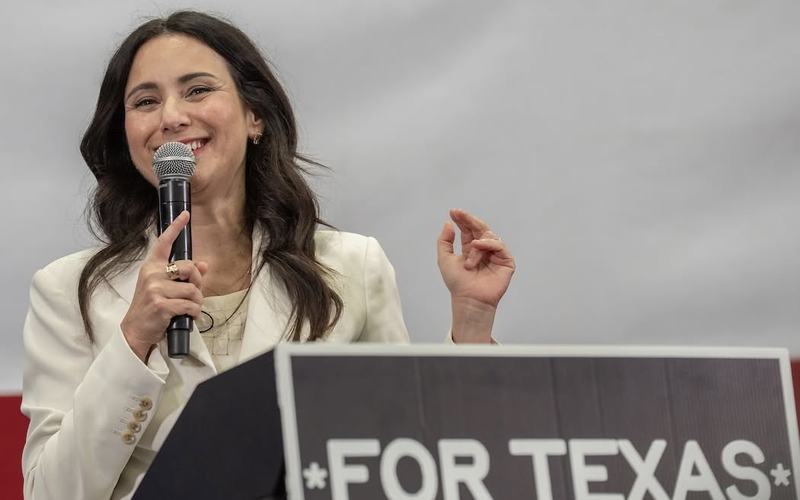
Texas Governor-elect Gina Hinojosa has said she will reverse outgoing Governor Greg Abbott’s designation of the Council on American-Islamic Relations as a foreign terrorist and transnational criminal organization, undoing an action Abbott took in November 2025.
Hinojosa, a Democratic state representative from Austin and former Austin Independent School District board president, defeated Abbott in the November 3 election and is set to be sworn in on January 19, 2027, becoming the first Latina governor of Texas and the first Democrat to hold the office in more than three decades. In a November 14 interview with The Washington Post, she described the designation as “nonsense” that diverted attention and funding from actual public-safety needs, framing her decision as part of a broader shift toward education funding, affordability, and away from the culture-war measures that defined much of the prior administration.
Abbott’s 2025 proclamation had labeled both CAIR and the Muslim Brotherhood as foreign terrorist organizations under Texas criminal law and as transnational criminal organizations under the state’s property code. The designation barred the groups from acquiring land in Texas and authorized the attorney general to pursue civil actions to limit or shut down their operations. Abbott’s office cited the Holy Land Foundation terrorism-financing case and alleged historical ties to Hamas support networks. The move was a state-level action only; the federal government has never placed CAIR on its official Foreign Terrorist Organization list. CAIR and its Texas chapters quickly sued in federal court, arguing the proclamation lacked a factual or legal basis and violated constitutional protections.
Texas was not alone in taking such steps. Florida Governor Ron DeSantis pursued similar measures, designating CAIR and the Muslim Brotherhood as terrorist organizations under state law and directing agencies to limit their operations and influence in the state. Those actions, like Texas’s, prompted lawsuits from CAIR alleging overreach and constitutional violations. Other Republican-led states have considered or advanced related restrictions on groups with alleged ties to designated terrorist financing networks, though none matched the formal land-purchase bans and enforcement mechanisms adopted in Texas and Florida.
During the 2026 campaign Abbott highlighted that CAIR Action, the group’s political arm, had listed Hinojosa as a preferred candidate and that she had voted against earlier legislation expanding the state’s authority to make such designations. After her victory, CAIR’s national office and Texas chapters congratulated her, calling the results a rejection of what they described as anti-Muslim targeting by Abbott and other Republican officials.
Founded in 1994 and headquartered in Washington, D.C., with chapters in multiple states including Texas, CAIR describes itself as the nation’s largest Muslim civil-rights and advocacy organization. It provides legal aid to individuals alleging discrimination, tracks reported anti-Muslim incidents, conducts public education about Islam, and advocates on policy issues affecting American Muslims. It operates as a U.S.-based nonprofit and states that the large majority of its funding comes from domestic donors. The U.S. government has never designated CAIR a foreign terrorist organization, and the group maintains that it opposes all forms of unjust violence, including terrorism.
Critics, including the Abbott administration, point to CAIR’s appearance in the Holy Land Foundation case, the largest terrorism-financing prosecution in U.S. history. In that Dallas trial, the Holy Land Foundation and five of its leaders were convicted in 2008 of providing roughly $12 million in material support to Hamas, which the United States has designated a terrorist organization since the 1990s. Federal prosecutors listed CAIR as an unindicted co-conspirator. A federal judge later found that the government had produced “ample evidence” of associations linking CAIR, the Holy Land Foundation, the Islamic Association for Palestine, and Hamas, although CAIR itself was never charged or convicted. Additional points raised by critics include documented links between early CAIR figures and the U.S. Muslim Brotherhood’s Palestine Committee, which investigators described as supporting Hamas infrastructure while seeking public-facing legitimacy;
CAIR has consistently rejected these characterizations, stating that it is not a terrorist organization, a front for Hamas, or an affiliate of any foreign terrorist group. It notes that unindicted co-conspirator status is not a finding of guilt, that it was never indicted in the Holy Land Foundation case, and that the federal government has never listed it as a foreign terrorist organization. The group has described state designations as politically motivated efforts to punish advocacy and chill free speech, and it has challenged the Florida measures on the same grounds as the Texas proclamation.
Hinojosa’s planned removal of the Texas designation would withdraw the executive finding that underpinned the land restrictions and related enforcement efforts, though it would not automatically erase separate statutes, ongoing litigation, or any independent investigations. The practical consequences will depend on how the new administration implements the change and on the outcomes of the related court cases.

Comments
No comments yet. Be the first to share your thoughts.