
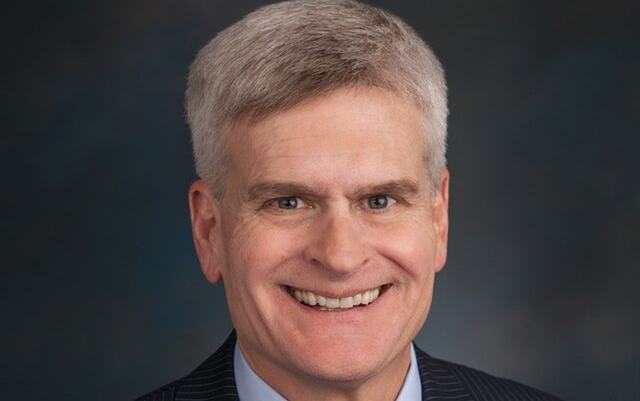
Sen. Bill Cassidy, R-La., called on President Donald Trump on Sunday, November 15, to replace Health and Human Services Secretary Robert F. Kennedy Jr., accusing the secretary of failing to deliver on several major healthcare priorities. Cassidy, a physician who chairs the Senate Health, Education, Labor and Pensions Committee, pointed to rising healthcare costs, the resurgence of measles and limited progress on ultra-processed foods as reasons for a change in leadership.
"If I were president, I would choose someone else because there needs to be accountability for higher healthcare costs, more measles deaths, losing elimination status, and no progress on processed foods," Cassidy said during an appearance on CBS's "Face the Nation."
Cassidy argued that Kennedy's performance could undermine Trump's legacy if the administration does not change course. He said voters signaled dissatisfaction with the status quo during the recent midterm elections, particularly regarding healthcare, and called for a different approach.
His remarks followed the broadcast of a recording in which Kennedy suggested that Democrats taking control of the Senate in January would leave lawmakers with little leverage over him. Kennedy also referenced White House Chief of Staff Steve Miller, describing him as an ally of the movement behind his agenda and saying he did not expect anything to stand in their way.
Cassidy rejected Kennedy's explanation, accusing him of trying to deflect responsibility for his performance as secretary. The Louisiana senator said many mothers who supported Kennedy had expected meaningful action on ultra-processed foods but had seen little progress. He recalled receiving hundreds of messages from constituents during the debate over Kennedy's confirmation and said those supporters had reason to be disappointed.
Cassidy also criticized the administration's handling of healthcare affordability, pointing to small businesses dropping health insurance coverage and employees struggling to pay their deductibles. He described the situation as a failure and said accountability was necessary.
Asked whether Kennedy should face impeachment, Cassidy said the decision ultimately rests with Trump. He dismissed the idea of making impeachment the central issue, arguing that the president should determine whether Kennedy remains in the Cabinet.
The senator also called for a more aggressive public campaign encouraging vaccination after discussion of the United States losing its measles elimination status. Cassidy warned that unvaccinated individuals can spread the disease to infants who are too young to receive the vaccine and people with weakened immune systems.
"If you have not been vaccinated, you could be the person that brings death to another," Cassidy said, urging the administration to repeatedly communicate the risks. He added that the message should be emphasized consistently to the public.
Cassidy said he remains in regular contact with the director of the Centers for Disease Control and Prevention, although the limited time remaining in the congressional session could make it difficult to schedule a public hearing. He cited a recent exchange with the director over a malfunctioning online tool for locating flu shots as an example of oversight conducted outside formal hearings.
The senator also addressed the pending nomination of Dr. Heidi Overton, Trump's choice to lead the Food and Drug Administration. The Senate committee was scheduled to consider her nomination Wednesday, but Cassidy declined to say whether he would support advancing it, explaining that he had spent the week speaking with Overton and other individuals and still had questions.
Cassidy previously raised serious concerns about Overton's involvement in developing the administration's childhood vaccine policies. However, he said senators must also consider the consequences of leaving the FDA under a succession of temporary leaders who could be more susceptible to Kennedy's influence. A permanent commissioner, he argued, could provide greater independence for the agency. Cassidy said he expected the committee's decision to become clear Wednesday.
Beyond healthcare, Cassidy expressed frustration over the lack of progress on legislation addressing Social Security's long-term finances. He accused Sen. Ron Wyden, D-Ore., the ranking member of the Senate Finance Committee, of resisting a hearing on the proposal.
Cassidy said Senate Majority Leader John Thune, R-S.D., and Finance Committee Chairman Mike Crapo, R-Idaho, had committed to holding a hearing and committee vote on the legislation. He also said Trump had personally pledged support.
The proposal would borrow $1.5 trillion to establish an investment fund separate from the existing Social Security trust fund. The money would be invested over a period of approximately six decades to help address the program's long-term financing challenges.
Cassidy acknowledged Wyden's opposition to investing taxpayer money in the stock market but argued that a comparable strategy had worked for the federal railroad retirement system. He also said he was open to considering alternative proposals, including legislation offered by Sen. Bernie Sanders, I-Vt.
"Congress is there to take tough choices, and now those tough choices are being ducked," Cassidy said.

Comments
No comments yet. Be the first to share your thoughts.